GTA 6 police and wanted system: disguises, identification and Criminal Profile
How GTA 6 police track clothing, faces, vehicles and pairs, what demonstrations show about escape, and how Criminal Profile differs from a wanted level.
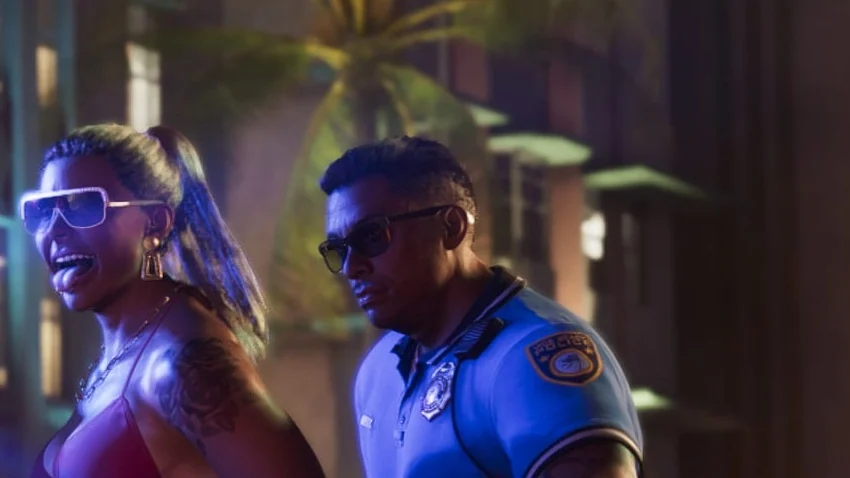
Police in GTA 6 search for criminals using information about what happened and known identifying details: clothing, appearance, a vehicle and even the fact that the protagonists are working as a pair. Getting out of sight and escaping the description police are using may therefore be different tasks. Demonstrations show how a mask, new clothes or another vehicle help in particular situations. Longer-term consequences of the protagonist’s behaviour are tied to a separate system, Criminal Profile.
Jason Duval and Lucia Caminos encounter this police force in the story campaign. Rob Nelson’s interviews with Japan’s Famitsu, his remarks in GamesRadar and IGN’s account of a demonstration help explain its rules. Nelson is Head of Development and one of Rockstar North’s senior developers. These materials explain the logic of pursuit, but do not provide a universal escape method.
Someone first has to report the crime
Nelson says police first need to learn about an offence, through witnesses or an alarm. Attention can even be drawn during preparation. In Famitsu, he gives the example of someone entering a shop with a visible weapon.
The same interview describes a different approach: enter unnoticed, use a tool to open the lock, and disable the alarm and camera. The example explains why stealth matters before a patrol arrives. It is not a ready-made instruction for every shop: entrances, witnesses and security may differ.
This changes the player’s first question. Before escaping, it helps to understand what gave the protagonist away and what information police have received. Even if officers have not personally seen them, a report may already start a search.
What police know about Jason and Lucia
GTA 6’s wanted system distinguishes knowledge of a crime from information about its participants. In IGN’s demonstration account, empty white stars mean police know an offence occurred but have not identified the suspect. Identifying details can become more specific during pursuit.
How does the player learn what police know? GamesRadar’s journalist describes four icons beneath the wanted stars: clothing, face, vehicle and the pair working together. After changing cars, the vehicle icon disappears and a patrol passes without recognising the new car. The episode shows how the interface helps players choose an action, but not every condition under which each icon appears or disappears.
GamesRadar reports that police can search for a face, clothing, a vehicle or a pair of people. This explains why another car may not solve the problem: if the driver’s clothes are known, they may also be recognised on foot. Nelson also mentions splitting up when police are looking specifically for a pair.
The stars still represent the wanted level. GamesRadar’s journalist saw six stars in the demonstration, rather than GTA V’s five. The sources used contain no full table of police forces at each level. The same author suggests red stars indicate that immediate pursuit has stopped. That is his interpretation, rather than a complete Rockstar-published key to interface states.
A mask, different clothes and another car
In Famitsu’s example, Nelson discusses roughly two stars and a mask worn when the crime was reported. Police are looking for someone in a mask, so removing it makes identification harder. The protagonist then puts away the weapon, watches the officers and carefully drives away in a vehicle they do not know. Police already know the clothes, so leaving the car without changing creates another identification risk. The example does not establish that removing a mask also helps once the face is already known.
This makes a search more interesting than a simple race for speed. Each action matters in relation to what is already known about the protagonist.
| Known identifying detail | Action described in the sources | What to keep in mind |
|---|---|---|
| A masked person | Remove the mask | Other known details may remain. |
| Clothing | Change outfit | IGN’s description of the demonstration explains that glasses or a hat alone may be insufficient if police know the clothing. |
| Vehicle | Switch to another one | Known clothing may identify the protagonist after they get out. |
| Two people together | Split up | This addresses the pair description, without promising to remove other details. |
In IGN’s demonstration, buying another outfit helped escape the search. That is one shown way out of a situation, rather than a guarantee that a clothing shop saves you at every wanted level.
Why escaping on foot can beat driving fast
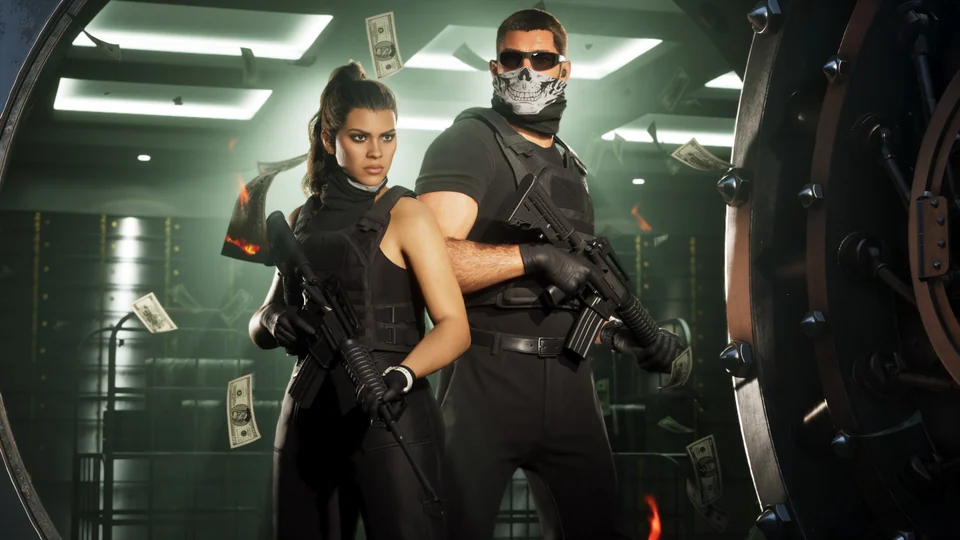
Nelson gives a surprising example for those used to car chases: at three stars in a city, a route through alleys and over fences may be more useful. A very fast car or sports bike changes the choice. This concerns an urban situation in Vice City, GTA’s fictional Miami-inspired city, rather than a rule for every road in Leonida.
In another GamesRadar article, Nelson describes a minimap change: officers do not appear on the radar constantly. Focus is used to detect them. The interview does not specify its exact range, duration or restrictions.
The GTA V habit of watching police markers on the minimap therefore no longer explains the entire chase. It becomes more important to see where pursuers are and where the protagonist can move while unseen.
Why the end of a chase may not end the search
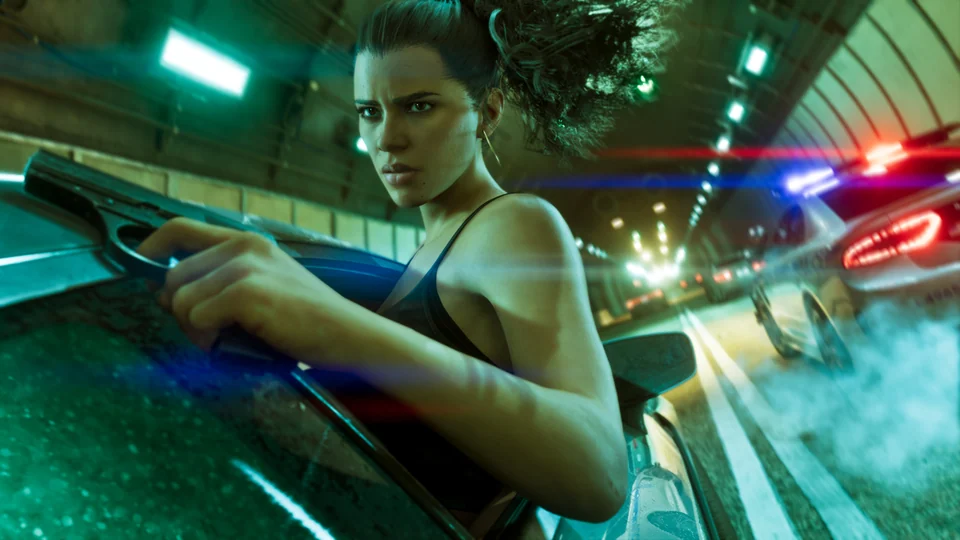
IGN’s demonstration account says officers remain at the crime scene for a while after the protagonist escapes. Returning can mean encountering them again. The episode does not establish the exact time before the location becomes safe.
The same demonstration shows Lucia hiding in a shop while an officer passes without finding her. It shows a possible hiding place, not that every interior automatically ends a search.
Nelson separately stresses in GamesRadar that police remember a criminal longer than before. That makes a useful distinction: leaving a pursuer’s sight, changing a known identifying detail and returning safely to the crime scene cannot always be achieved with one action. These explain different situations, rather than naming three separate game meters.
Criminal Profile: how the world responds to behaviour
Criminal Profile concerns the protagonist’s habitual way of acting and the world’s response. In interviews and the demonstration, Nelson distinguishes a calculating criminal from someone who regularly uses unnecessary violence. Repeated behaviour has consequences beyond one chase.
The profile should not be reduced to the face, clothing and vehicle a patrol uses for identification. It is also treated separately from Jason and Lucia’s relationship: the pair’s romantic connection does not explain every police action.
According to Famitsu, this is not Red Dead Redemption 2’s honour system carried over with the same shop discounts. Nelson does not propose one correct, necessarily “good” play style. What matters is the kind of criminal the protagonist becomes and how others respond. A detailed numerical profile scale and full list of consequences are not revealed here.
What is known about arrest, and what is still missing
IGN’s account calls arrest Busted: after detention, play resumes and the protagonist returns to the world. Famitsu also reports a risk of losing carried cash when arrested or killed. These materials do not establish the full list of losses or the return location.
Will officers always try to arrest without shooting at low wanted levels? The sources give no such rule. Their response also depends on the player’s actions and aggression. In one demonstrated episode, shooting tyres overturned a patrol car without killing its officers; that does not promise a safe outcome for every attack.
The examined interviews contain no full table of timers, search radii or units at each star level. IGN describes the use of open-world systems in missions, but story conditions may restrict choices. Nor can detailed rules for future online play be inferred from these campaign scenes.
The most useful habit suggested by the demonstrated situations is to identify what police are using to find you first. Another car, a removed mask and a new outfit solve different problems. Sometimes the best way out is over the nearest fence rather than inside the next stolen vehicle.
Sources
- Famitsu, interview with Rob Nelson, 28 August 2026: crime reports, masks, clothing, profile and cash.
- GamesRadar, wanted levels and identifying details: Nelson’s remarks and the journalist’s demonstration observations.
- GamesRadar, police memory and escape methods: pursuit, minimap and Focus.
- IGN, GTA 6: The Big Interview, 7 October 2026: demonstration scenes and Rob Nelson’s explanations.
- Rockstar Games, official GTA VI screenshots: original cover, preview and two article illustrations.
The original article’s information was checked on 12 October 2026. Its examples come from story-campaign demonstrations and interviews.