GTA 6 car damage: crashes, handling and repairs
What we know about GTA 6 vehicles: handling, crashes, glass, tires, repairs, fuel and charging, based on Rockstar explanations and examined footage.
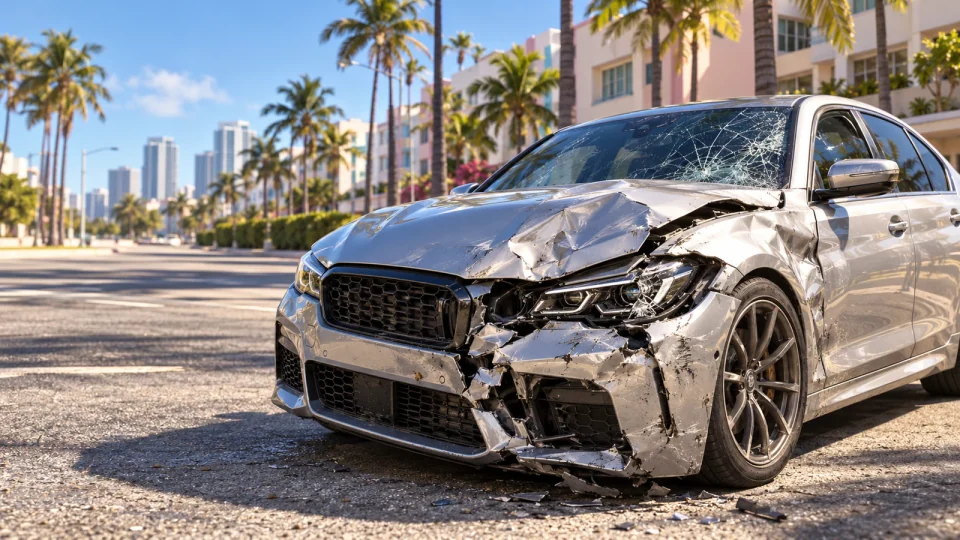
Cover: AI-generated editorial illustration about vehicle damage.
Car damage in GTA 6 already has gameplay consequences: a damaged vehicle sells for less, and a shot tire causes a patrol car to roll over in a scene shown to the press. Rockstar has rebuilt handling to give cars a stronger sense of weight and more distinct characteristics. Repairing, refueling and charging electric vehicles also feature in published accounts of demonstrations, although the full operating rules remain unknown.
The main information comes from Rockstar’s official An Extended Look, an interview in the Japanese magazine Famitsu, and accounts by TGG, who was invited to Rockstar North. He watched Rob Nelson, head of development and co-head of the studio, play and recorded Nelson’s explanations. That gives us a detailed look at the vehicle systems. TGG did not drive a car himself, so his account describes Nelson’s play and the developer’s explanations.
How Rockstar changed the handling
Speaking to TGG, Nelson explained that the driving model was rebuilt for current hardware. The team gained more scope to tune transmissions, tires, suspension and steering. He was describing how developers shape a car’s behavior, not confirming a menu that lets players change each of those settings.
Nelson’s broad aim is to retain the best of GTA IV’s sense of weight and GTA V’s accessibility. The implication for players matters more: cars should feel more distinct. Some powerful rear-wheel-drive vehicles will require more careful throttle control. Accelerating hard out of a corner will not necessarily be the quickest escape.
In an interview with Broughy1322, who has tested GTA vehicles for years, TGG recalled Nelson spinning a car during the demonstration. TGG felt that muscle cars handled more convincingly than in GTA V. He did not test them with a controller in hand, so this is an impression from a demonstration, not a measurement of grip or stopping distance.
Dazed adds an interesting detail: racing drivers work on the vehicle-handling team. That does not mean GTA 6 is becoming a racing simulator. Nelson also stresses accessible driving, and the magazine does not detail the sporting records or specific contribution of each employee.
Why comparisons with GTA IV and GTA V differ
GTA 6 car physics cannot be reduced to a choice between the two previous games. Suspension softness, a tendency to slide and the response to steering can differ even between two vehicles in the same game.
Broughy1322 tried to recreate an An Extended Look maneuver in GTA V: reversing, turning around and driving over uneven ground. In the video, he saw considerable similarity to GTA V. A sports car in the racing sequence also regained grip fairly quickly after crossing a rough patch. By contrast, he noted softer, more visibly active suspension on an older open-top car.
This is a useful challenge to claims that Rockstar has “fully brought back GTA IV physics.” The opposite conclusion, that nothing has changed, would also be premature. Speed, road conditions and driver inputs do not match exactly in that comparison, and Broughy emphasizes that he has yet to drive in GTA 6. His analysis points to differences worth testing after release rather than delivering a final verdict.
Roads, off-roading and top speed
It is not just the cars that are changing, but the places where players drive them. In Famitsu, Nelson describes narrower roads closer to real-world widths and heavier traffic. The official video shows an open-top car moving between passenger cars and a truck. Overtaking requires finding a gap rather than assuming an empty lane.
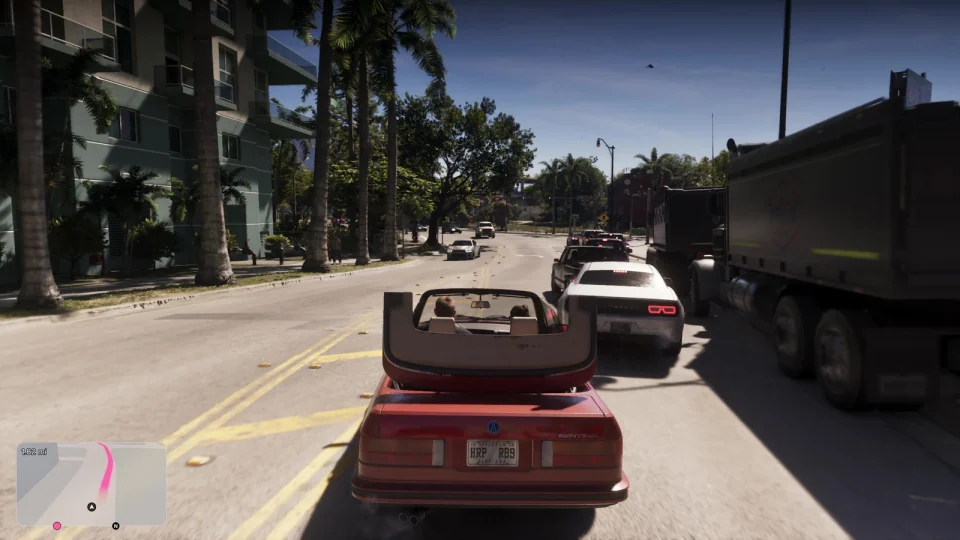
At the same time, Nelson says fast cars can reach higher top speeds than in GTA V. He gave no figures. That creates an interesting combination for chases: more speed is available, while free space in the city is scarcer. Separate tests will show which models perform best. Known makes and models are collected in our GTA 6 cars guide.
Choosing a vehicle should matter more off-road, too. Nelson specifically told TGG that many expensive sports cars perform poorly away from pavement and that off-road modifications matter for some vehicles. This does not prevent players from leaving the road. The question is how suitable their chosen car will be.
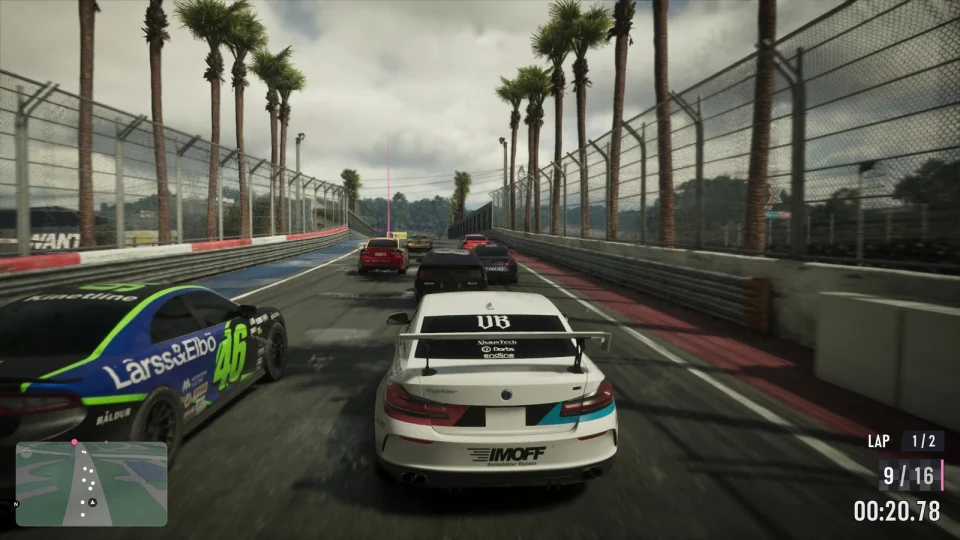
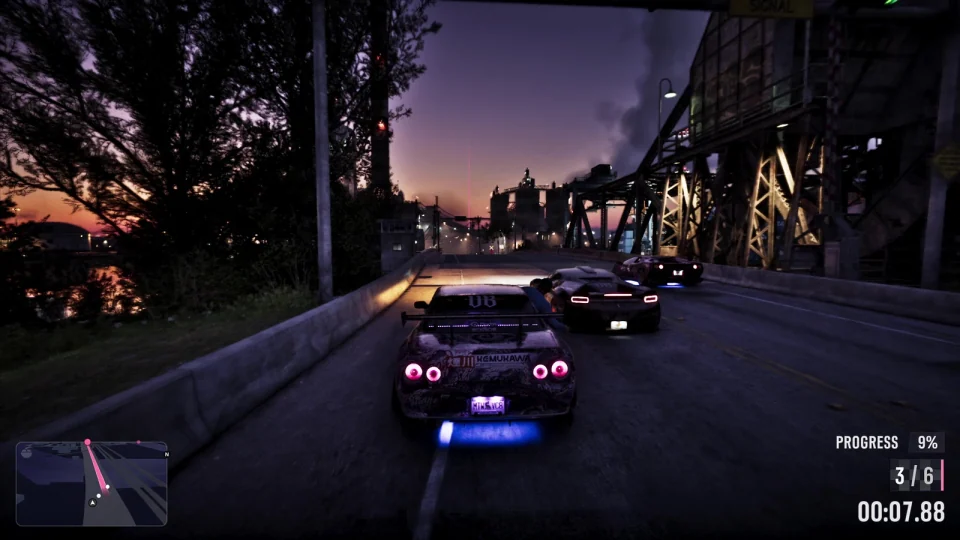
An Extended Look features a circuit race, a street race using nitrous oxide boost discussed by TGG and Broughy, and motocross on a dirt track. The motorcycle sequence shows ruts and rising dust. These scenes suggest how different surfaces look, but reveal no tire-grip coefficients for mud, sand or rain. A dirty bodywork finish also does not establish that cars must be washed or serviced on a schedule.
Bodywork, glass and collisions
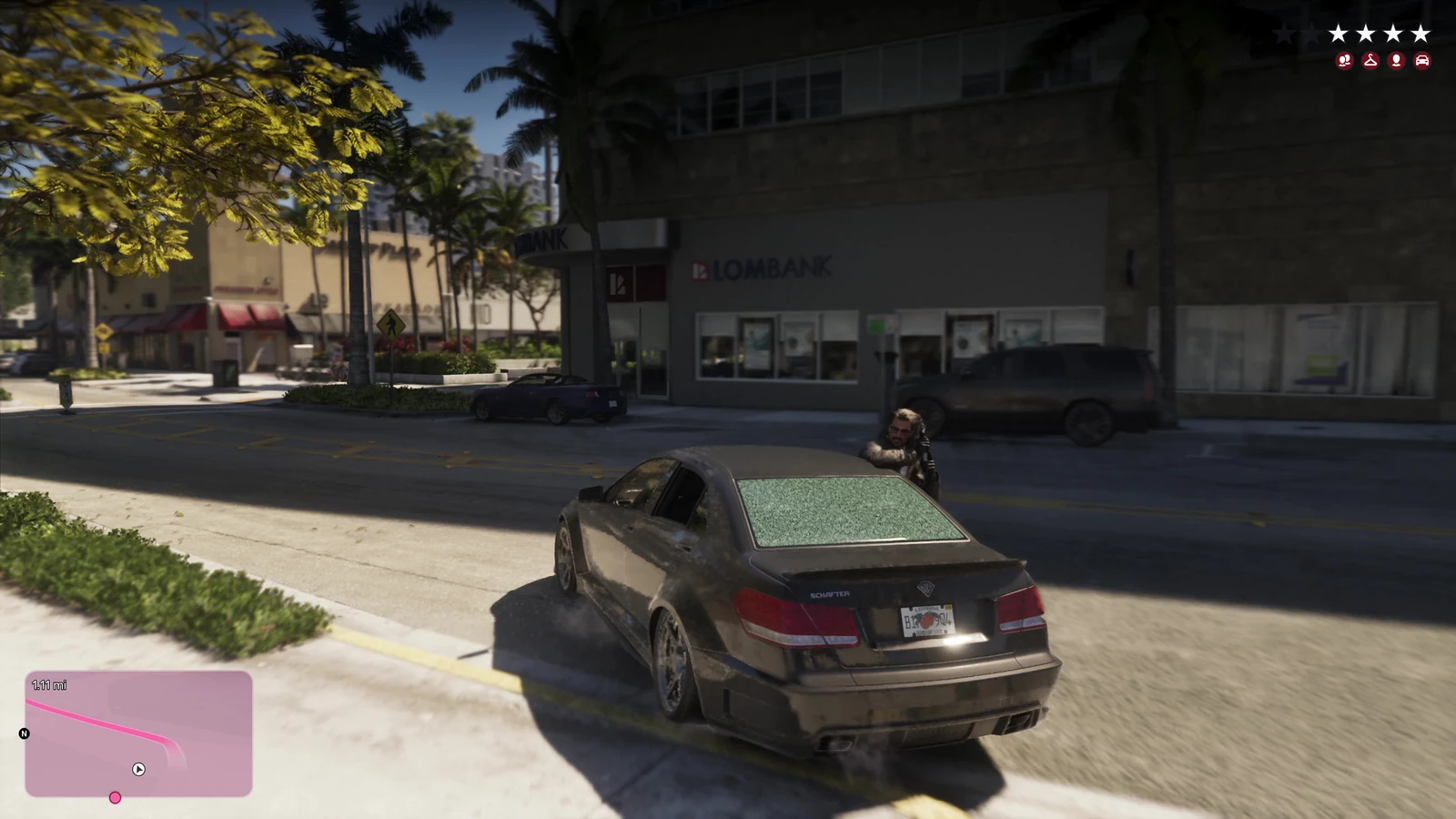
The official chase clearly shows a car continuing to move despite visible damage. The sedan’s side panels are dented and scratched, and its rear window has a dense web of cracks. The protagonists keep driving and shooting. The sequence shows the condition of that particular car, but cannot tell us how many impacts another vehicle could withstand.
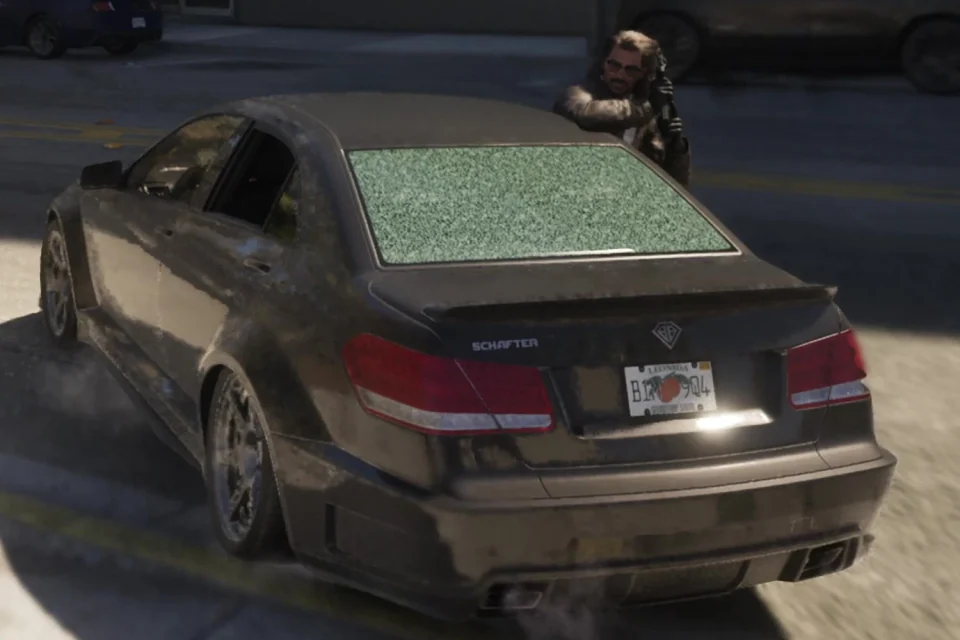
Crop from An Extended Look. View the full frame.
A harder collision appears in a short August leak clip published by iPhones. A passenger car hits a truck on a bridge and bounces upward as fragments fly around it. The source shows the point of impact, but the recording quality does not let us identify every piece that comes loose with confidence. The build date is unknown, and the impact speed was not measured.
Watch the original collision clip.
Claims of BeamNG-like vehicle damage, cars splitting in two, and full simulation of every chassis component therefore go too far for now. Stories about splitting cars and the effects of extra cargo appeared in old lists attributed to an alleged insider. The sources examined here contain neither a verified full original of that claim nor Rockstar confirmation of those promises.
The claim about procedural glass breaking, where a system generates cracks instead of using one preset pattern, has a more specific origin. In March 2026, TwistedVoxel preserved a search snippet from former Rockstar programmer Brady Jessup’s profile. It mentioned work on procedural glass breaking for vehicles and props. The term describes the general approach. The entry indicates an area of development, but does not describe GTA 6’s finished algorithm. We do not know how cracks are calculated, what affects their pattern or how long shards remain.
Nelson did explain one practical consequence of broken glass directly: smashing a window while stealing a car triggers its alarm. Here, damage affects the risk of attracting attention, as well as the car’s appearance.
What shooting tires does
One of the clearest examples comes from Famitsu. A journalist asked Nelson about a scene in which Jason shoots a patrol car’s tire, and whether the point of impact affects the vehicle’s condition and the driver’s reaction. Nelson confirmed that it can, explaining that the patrol car rolled over in the scene shown, but the officers did not die.
This offers a way to disrupt a pursuit without aiming directly at a person. It is, however, the outcome of a particular scene. It does not mean that shooting any tire is safe for the driver or that a vehicle will always roll over after one bullet.
There is also an account of repeated attempts. Italian creator MikeShowSha watched Nelson shoot at pursuing vehicles’ wheels several times. According to him, the outcomes varied: a car could skid or roll over. MikeShowSha therefore believes the crashes he saw resulted from events in the game rather than a preset sequence. This is a guest’s account of one demonstration, not a test of every chase or vehicle.
TGG also reports that Focus, a mode that slows time, highlights a vehicle’s engine, fuel tank and tires. That suggests target choice matters, but provides no damage table for individual components. The number of hits required to disable an engine and the effect of suspension damage on different cars have yet to be explained.
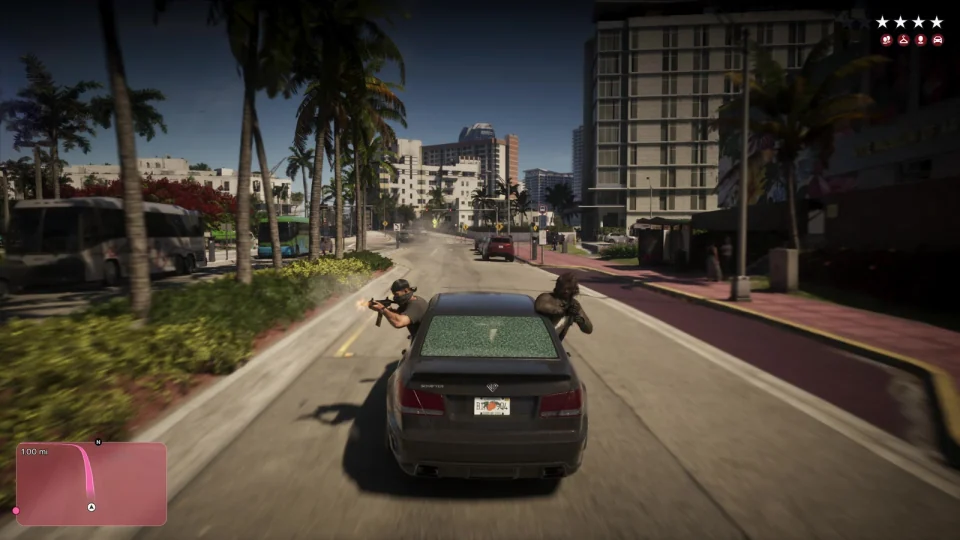
A crash itself can trigger a separate camera view. TGG saw it during a severe collision and says the effect can be turned off. The camera movement and the physical result of the impact are separate things: a dramatic angle alone does not reveal which rules produced it. We cover ways to escape a pursuit in our article on police and wanted levels.
Car fires and explosions
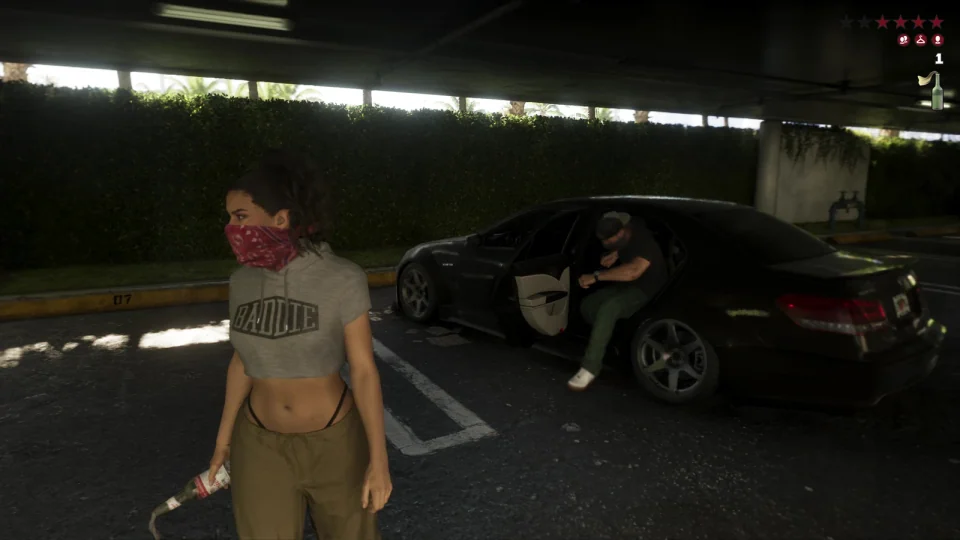
At the end of a car escape, Lucia gets out of the sedan and throws an incendiary bottle at it. An Extended Look shows flames on the car and separate burning patches on the nearby ground. It is a clear example of setting an abandoned vehicle on fire.
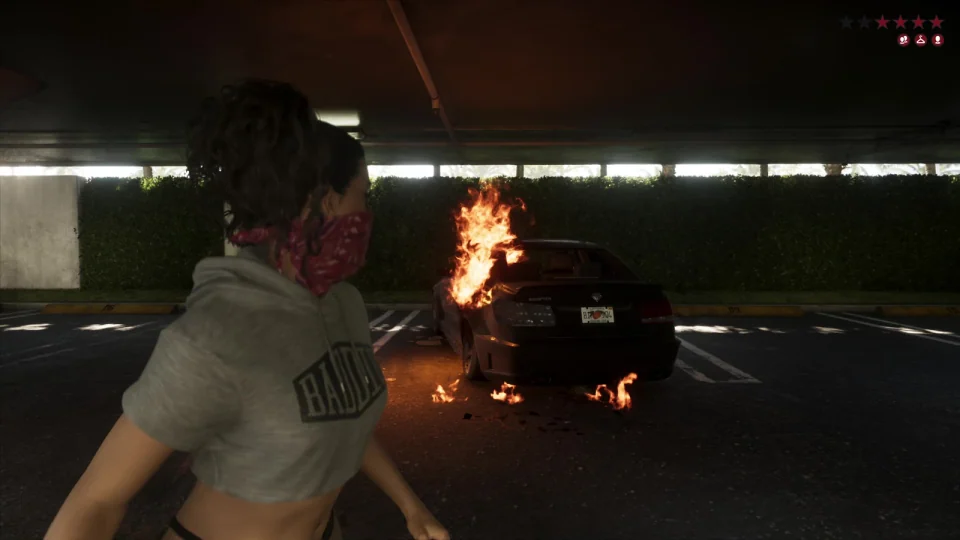
It does not establish a universal explosion timer. The burn duration, the effect of fuel quantity, damage to the tank and how an electric vehicle would differ in this situation have not been explained. Nor can we promise an instant explosion from any shot to the tank area. That would require separate examples under known conditions.
Repairs and the cost of a crash
Damage has an economic side. Nelson told Famitsu that scratches and impacts lower the value of a stolen car. When taking it to a buyer, careful driving helps preserve the payout. Other ways to sell stolen goods are covered in our article on earning money in GTA 6.
At Pay n Spray, players can repair and repaint a car to change the color known to police. Tuning shops handle complex paintwork and specialized modifications. TGG relays Nelson’s explanation that shops have different specialties and no single location does absolutely everything. Some vehicle services open up as the story progresses and characters make contacts.
TGG also saw another repair option at a gas station: before refueling, he was shown a choice between fuel and restoring the car. No price list has been published, however. Advice to “always repair before selling” is premature because we do not know whether the higher sale price covers the repair cost.
Recovering a personal vehicle should not be confused with repairing one. Nelson described paid recovery through Scooter Bros and impoundment of a car abandoned under police observation. His statement does not separately explain what happens to a completely destroyed vehicle. GTA Online’s insurance system cannot yet be assumed for GTA 6.
Fuel and electric vehicle charging
We know more about the need to refuel than about detailed engine wear. TGG saw Nelson pull into a gas station in a car low on fuel. The character gets out, and in the version shown, filling the tank requires holding R2 on the controller. TGG recalls the action taking about ten seconds. That is an estimate of the animation he saw, not a guaranteed duration for every fill-up in the final game.
The clearest risk is grabbing a car in a hurry only to find its tank nearly empty. TGG explains this with the example of escaping after a robbery. A vehicle prepared in advance removes that particular uncertainty. Fuel consumption per mile, tank capacities and the effect of speed on range have not been published.
Electric cars do not have unlimited range, either. Speaking with Broughy, TGG said he saw a charging icon on the map and asked Nelson about it. Nelson confirmed what the location was for. TGG did not see the charging process, so charging time and its differences from refueling remain open questions.
Settings require similar caution. The two discussed whether fuel consumption can be disabled and whether it works the same way during story missions. They had no confirmed answer. TGG’s assumption that the system is mandatory cannot be turned into a discovered menu option or a final rule for every mission.
Vehicle features we have yet to see
Manual gear shifting, rotating a car in midair and righting an overturned vehicle yourself remain unconfirmed. When Broughy asked directly, TGG said he had not seen these actions. That is different from declaring the features removed: a lack of demonstration does not establish a feature’s absence.
The same applies to a speedometer. TGG did not notice one, but explicitly allowed that a setting might exist. He also saw fuel and engine icons without clarifying when they appear. Those indicators do not explain a complete system of engine, axle and suspension failure, overheating and maintenance. Different vehicles hold different amounts of loot bags, but trunk capacity does not establish that cargo affects braking.
A meaningful comparison of cars will require matching speeds, obstacles and surfaces, plus repeated attempts. It will be especially important to test how visible damage relates to handling and which consequences persist after leaving a crash scene. Our broader article on GTA 6 physics covers interactions involving people, water and objects.
Sources
- Rockstar, An Extended Look: official footage of driving, a chase, bodywork damage, fire and races.
- Famitsu, interview with Rob Nelson: consequences of damage, tires, roads, repairs and repainting.
- TGG, detailed account of the vehicles: Nelson’s explanations and the guest’s observations about fuel, handling, shops and crashes.
- Broughy1322, interview with TGG: charging, manual gears, air control and limits of what was seen.
- Broughy1322, driving analysis: comparison of specific maneuvers with GTA V.
- MikeShowSha, answers after the closed demonstration: repeated shots at tires and different chase outcomes.
- Dazed, development feature: racing drivers on the handling team.
- TGG’s original notes: highlighting vehicle components in Focus.
- iPhones, analysis of August recordings: origin of the truck collision clip.
- TwistedVoxel, preserved glass-related entry: history of the programmer profile claim.
- Shazoo, January rumor list: origin of claims about a car splitting apart and cargo weight.