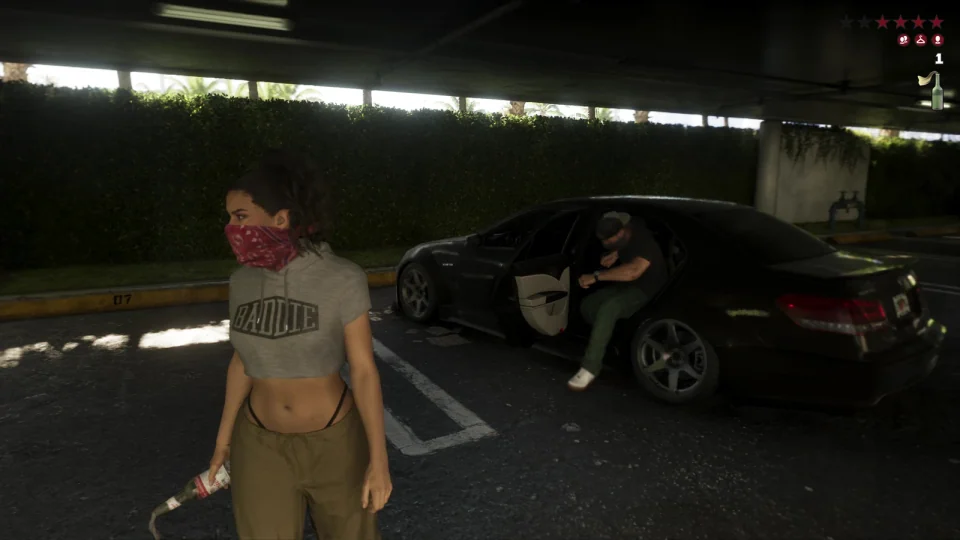
GTA 6 graphics: how the visuals changed across the previews
Compare GTA 6 graphics across the trailers and Extended Look: lighting, color, image softness, reflections, shadows and detail, with original frames and exact timestamps.
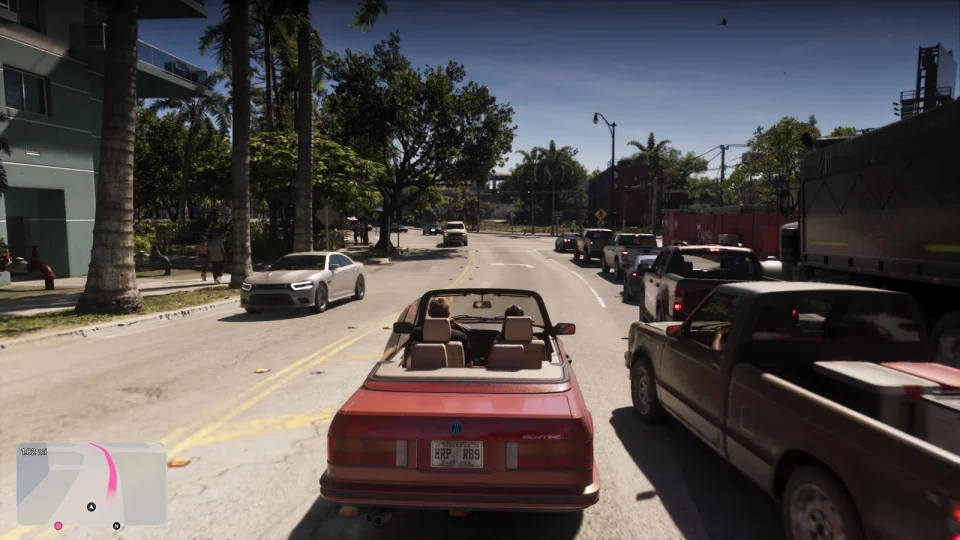
GTA 6 looks softer in the new trailer than it does in some Extended Look scenes. Bright areas have a more visible glow, distant scenery loses contrast, and transitions between light and shade look smoother. Detailed surfaces, complex reflections and a dense environment remain in the frame. What is much harder to establish is how much of the difference comes from rendering settings, artistic direction or the conditions of a particular scene.
This comparison uses Rockstar’s official 4K video releases: the first and second trailers, the August Extended Look and the October trailer. Technical observations were checked against Digital Foundry’s direct analyses of all four showcases and Filippo Tarpini’s color analysis. The focus here is the image itself: light, color, clarity, materials and world detail.
Graphics across the years: 2022, 2023, 2025 and 2026
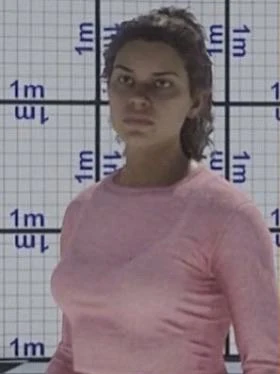
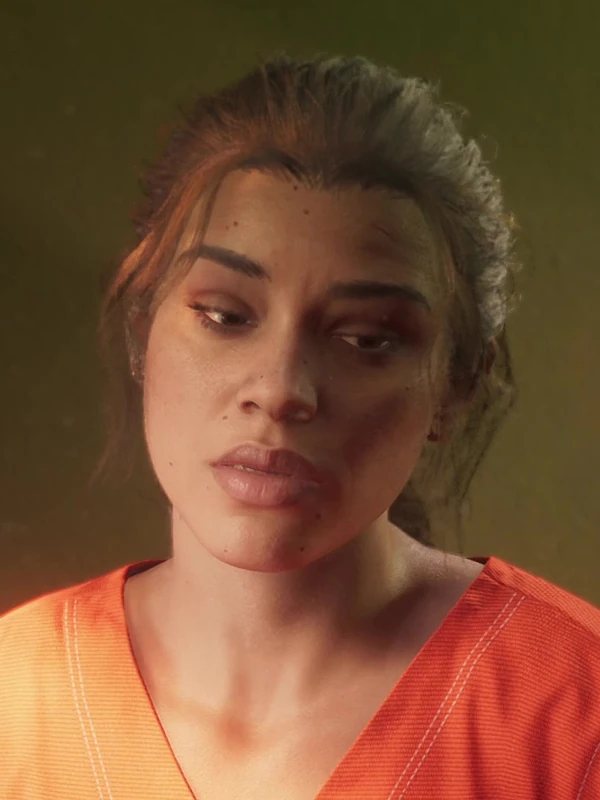
It is easier to compare the same subject side by side. The top row shows Lucia and the bottom row Jason. Look at light and shade on their skin, hair edges, individual strands and highlights. Lighting conditions and the quality of the original recordings differ, so these frames show stages in the development of the image, not a controlled test of identical settings.
Early development
First trailer, 00:10
Second trailer, 01:04
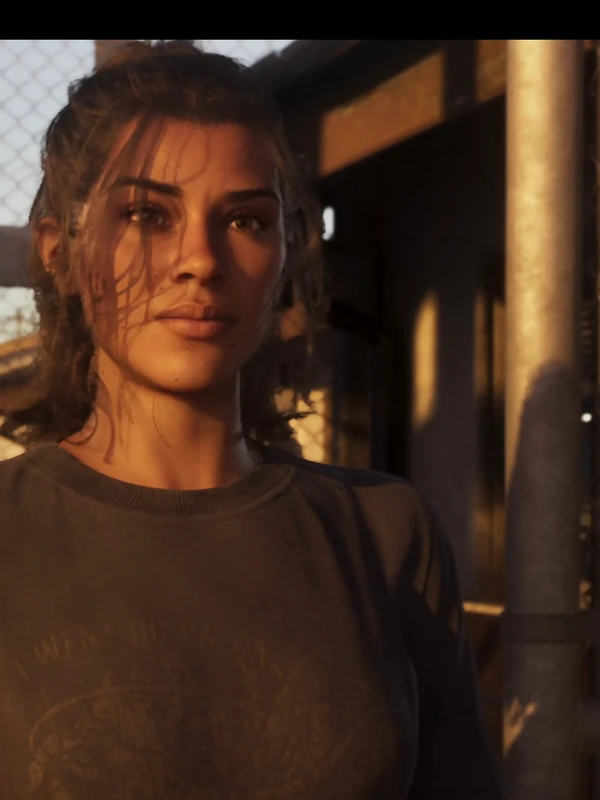
October trailer, 00:41
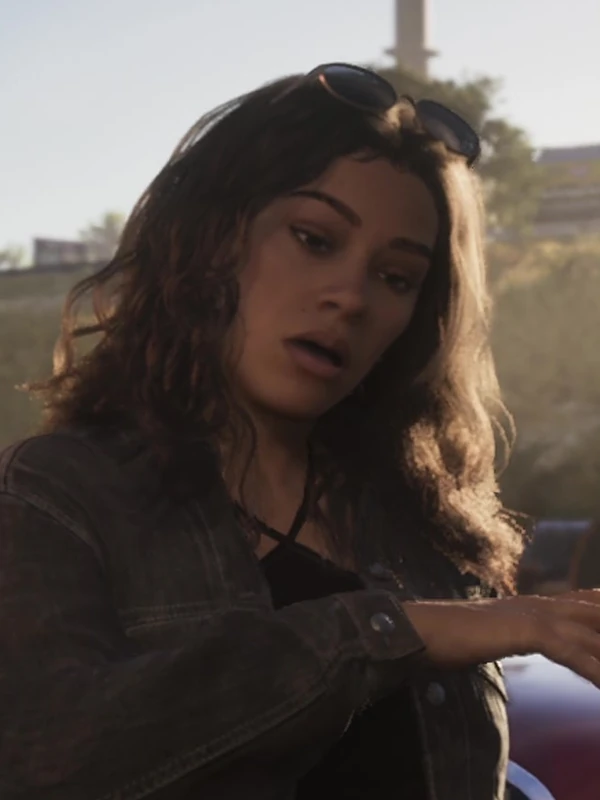
Early development

First trailer, 01:16
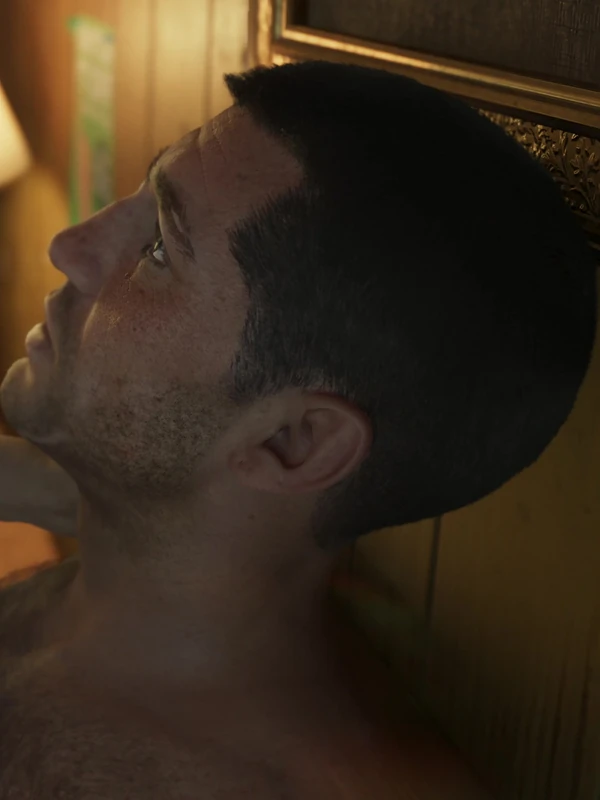
Second trailer, 00:28
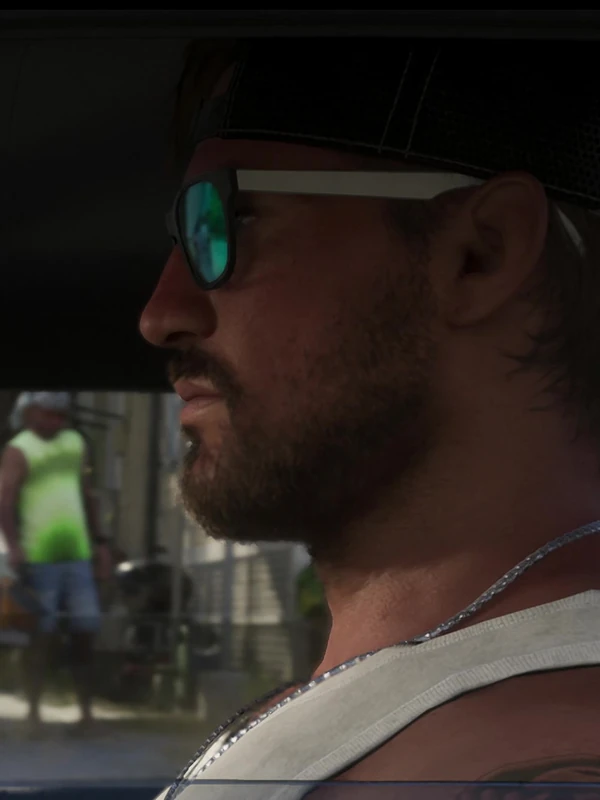
October trailer, 00:41
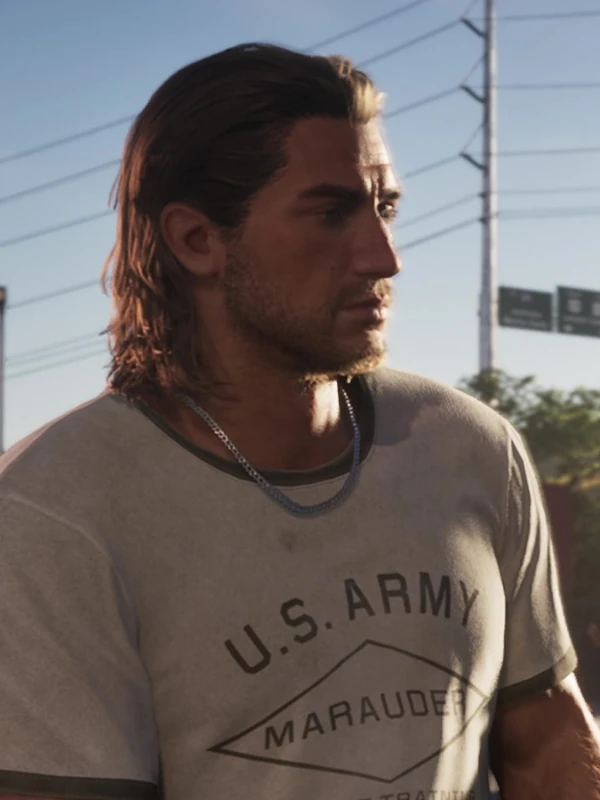
The 2022 excerpts come from a supplied compilation of early development footage. The 2023, 2025 and 2026 columns use Rockstar’s original videos; the 2026 column uses the October trailer. Color and sharpness have not been corrected. Select a frame to open a larger crop. On a narrow screen, scroll the comparison horizontally.
Which showcases are being compared?
GTA VI has already appeared in several presentations with noticeably different visual styles.
| Material | Release date | What it offers for comparison |
|---|---|---|
| First trailer | December 4, 2023 | The initial image of Vice City: bright daytime views, night lights, water, close-ups and a dense urban setting |
| Second trailer | May 6, 2025 | More close views of materials, interiors, complex lighting and everyday scenes |
| An Extended Look | August 27, 2026 | Longer sequences with the interface, driving, firefights and transitions between interiors and streets |
| New trailer | October 15, 2026 | A short montage in which the soft image, bright highlights and color treatment are especially noticeable |
These are the videos’ release dates. They do not tell us when the game version shown was built or when any particular scene was completed. Calling them four builds with precisely known dates would be misleading.
Take-Two explicitly said the second trailer was captured on PlayStation 5. Rockstar also confirms PS5 gameplay capture for Extended Look. That does not establish a particular graphics mode for every later video, or guarantee that the finished game will run at the same settings in every circumstance.
The early 2022 footage belongs in a separate category. Take-Two confirmed that recordings from early development leaked online. They help show how far the work has progressed, but treating them as an equivalent set of graphics settings alongside the official October trailer would be unsound.
One sequence in 2025 and 2026
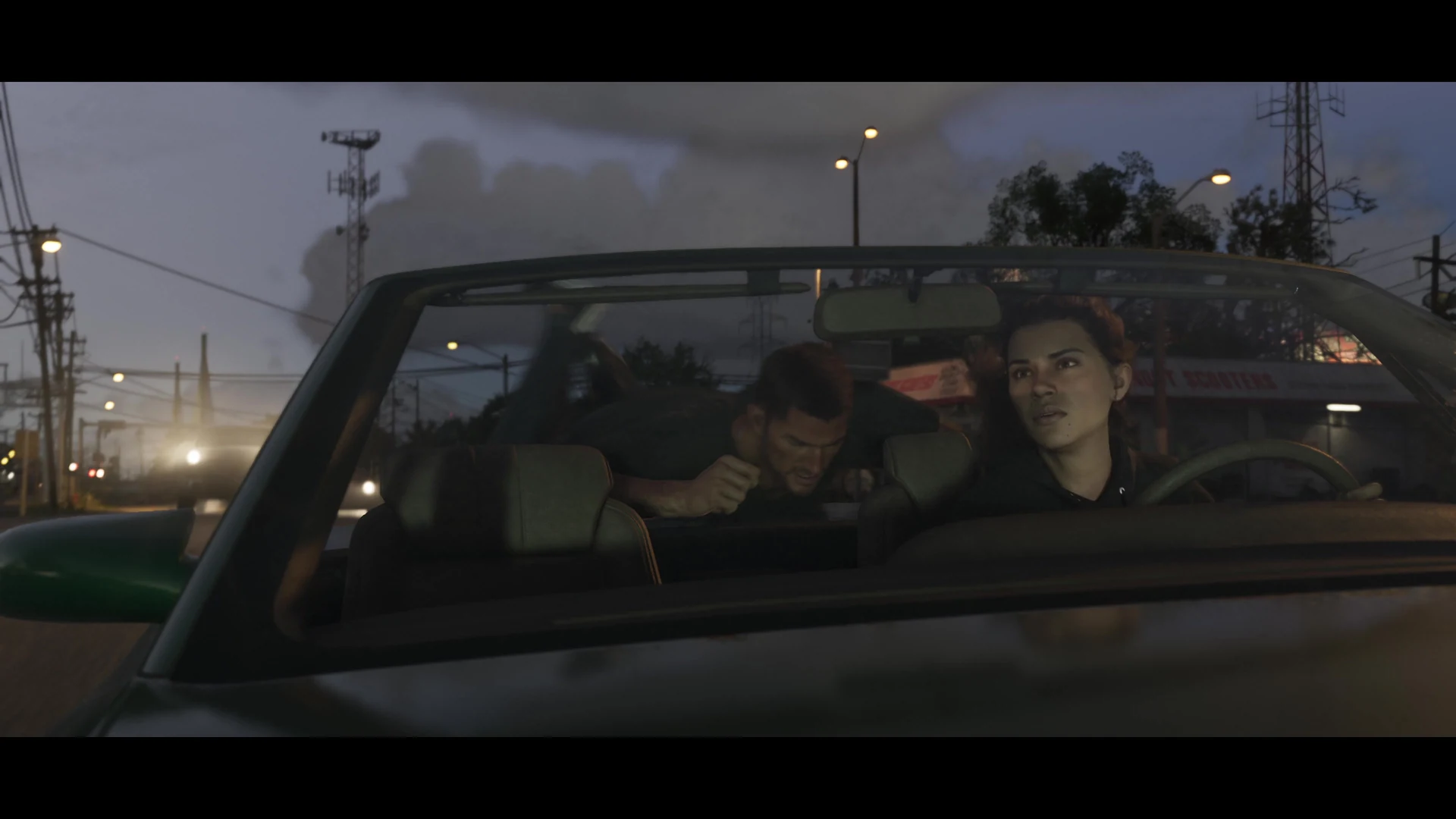
Second trailer, 02:29.7
PlayStation ad, 00:25.4
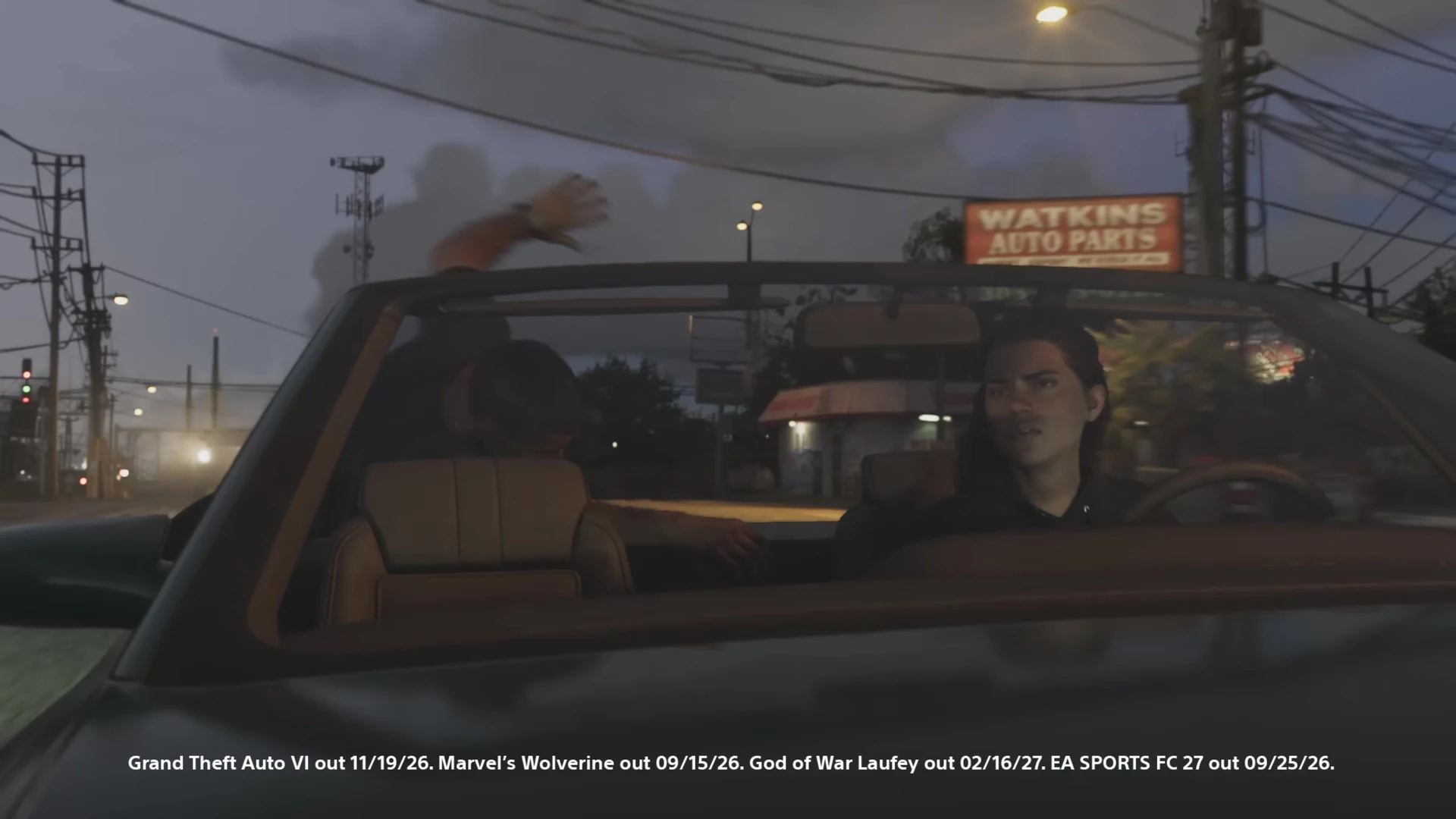
The same sequence in two releases. Compare the seat upholstery, windshield frame and wires over the road: they remain. The later version removes the black bars and crops the frame differently. The moments of motion differ slightly, so the highlights cannot measure an improvement in lighting.
Extended Look and the new trailer: what stands out?
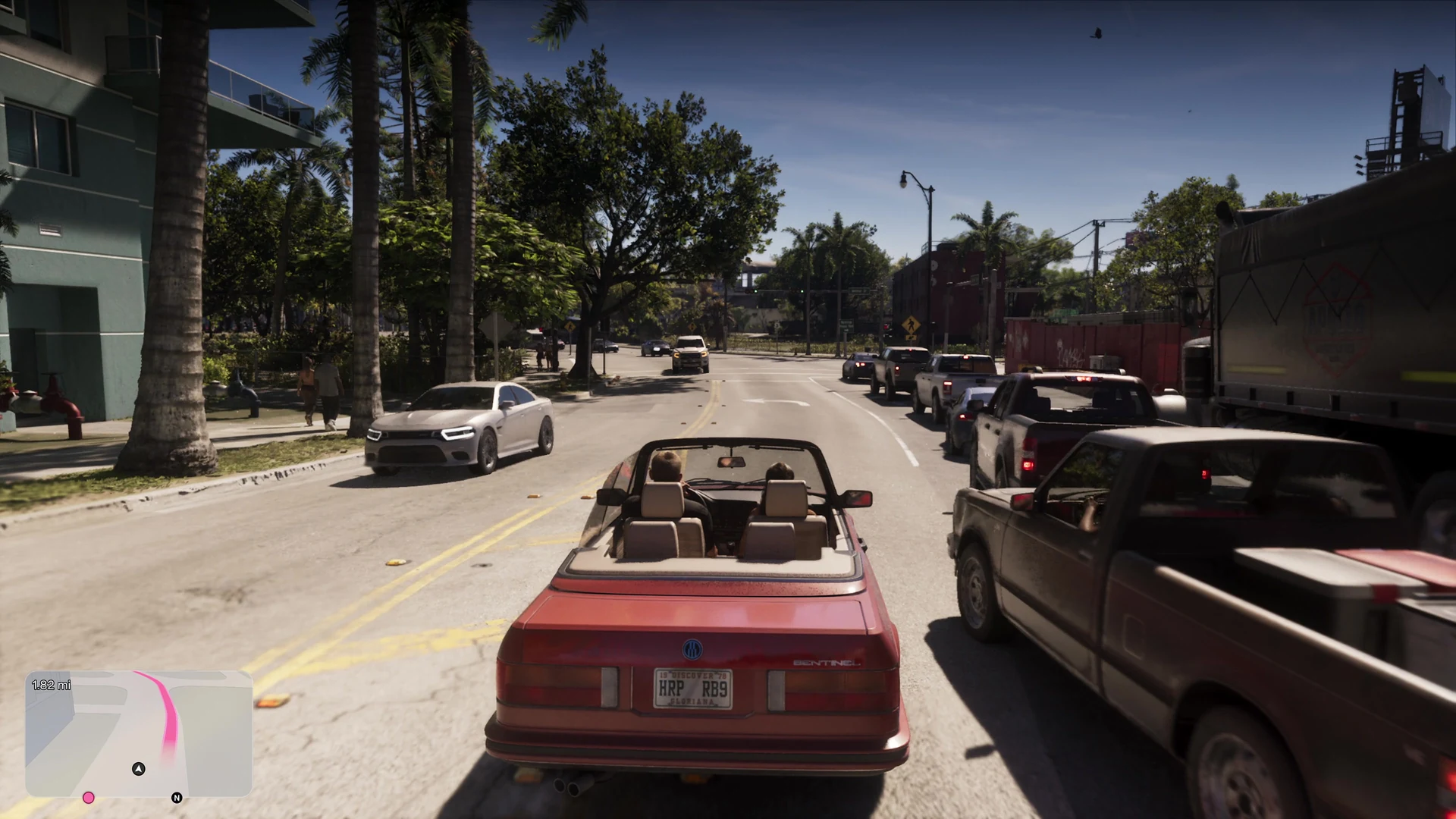
At 08:33 in an Extended Look daytime drive, the image relies on a strong separation of light and shade. The asphalt is bright, while the tree canopies and cars on the right are much darker. Road markings, wires, bark texture and reflections on car bodies are easy to make out. The foreground looks fairly crisp, especially around static objects beside the road.
The marina at 00:06.5 in the new trailer looks different. A soft glow surrounds the white boat hulls and hangar roof. Fine detail has less contrast: covers, storage racks and vegetation are harder to separate than the large patches of light and dark. The boatyard remains crowded. The hulls, covers and racks are visible, even though smaller features do not stand apart as clearly.
Extended Look, 08:33
New trailer, 00:06.5
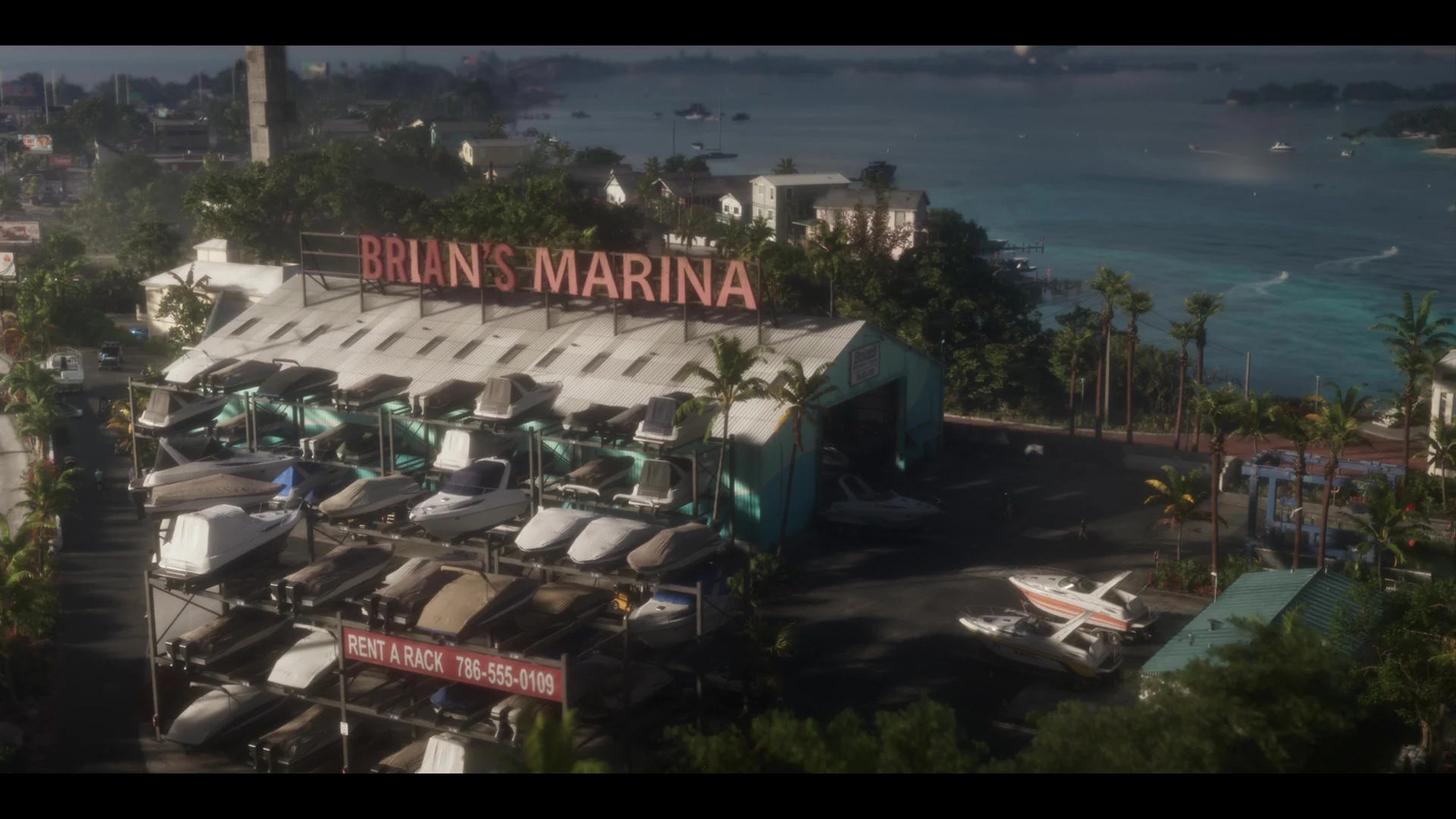
On the left, road markings, cars and canopy shadows stand apart more sharply. On the right, white boats and the roof are surrounded by glow, and smaller objects are less distinct. This compares the contrast of two showcases; the locations and lighting differ.
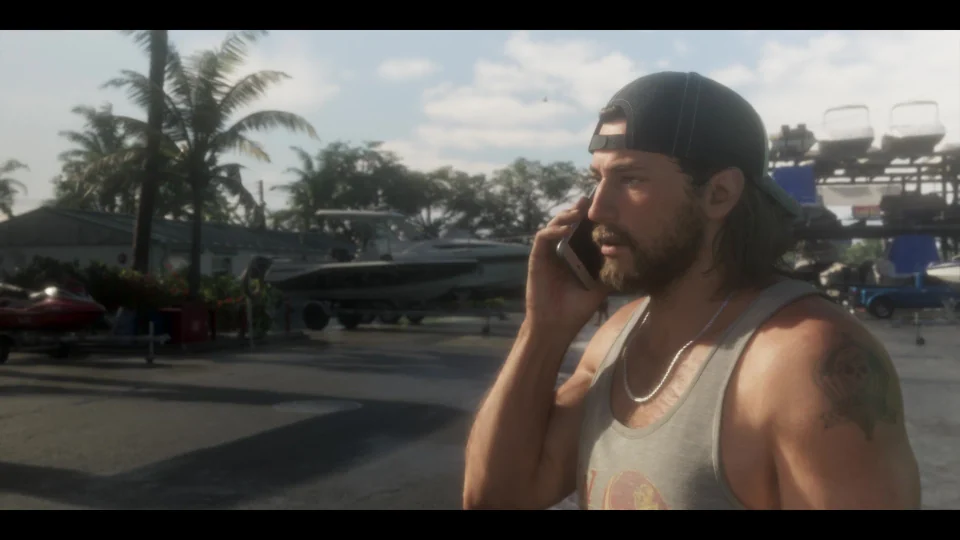
The difference continues when people enter the frame. In the Extended Look rooftop conversation at 12:17, the lit arm, dark clothing, pale railing and distant buildings are clearly separated. During the new trailer’s marina phone call at 00:12.7, the bright sky and boats behind the character look milkier. Palm and rack outlines are softer, and light falls into shade more gradually on the skin.
That supports a description of the visual impression: in the selected October shots, the image looks less hard-edged and more diffuse. But these scenes take place in different locations with different light directions. They cannot honestly tell us how much Rockstar changed overall contrast or shadow quality across the game.
There is an important detail in that same August rooftop conversation. The distant city already looks noticeably softer than the people and railing in front of the camera. Comparing the originals does not support the claim that everything used to be sharp and blur was only added later.
Light and color: why the new trailer feels more cinematic
One of the new trailer’s most revealing shots comes at 00:37. Sunlight shines through a window behind the characters. A bright area takes up a substantial part of the image, a halo spreads around it, and lit edges define the hair and shoulders. Streams of water are visible against this background. The staging makes the shot atmospheric, but reduces the sense of sharpness: some transitions seem to dissolve into the bright light.
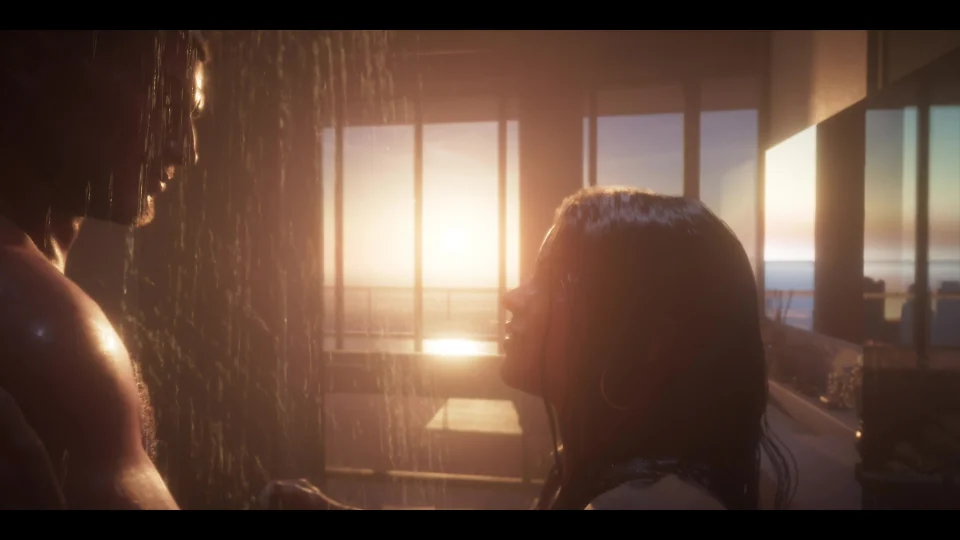
The glow around bright areas is commonly called bloom. It imitates one effect of a camera lens. It differs from simply blurring the whole frame: the change is strongest near a bright source or highlight. Digital Foundry also notes pronounced bloom and haze in its October analysis, but does not identify them as the cause of an established technical downgrade.
The second trailer used a similar approach to light. At 01:12-01:14, a bright window lights a room, part of the image is washed in strong light, and shadows and highlights define the people. October makes a particular impression stronger in selected shots, but the idea of an image built around bright backlighting was present earlier.
Color cannot be reduced to a single saturation scale either. In the August interior with pink curtains, around 06:30, color fills the room and falls on nearby surfaces. At the October pool, 01:15.5, deep blue dominates and areas around the lamps turn purple. These are different lighting setups. They show the image’s range, not a wholesale replacement of one palette with another.
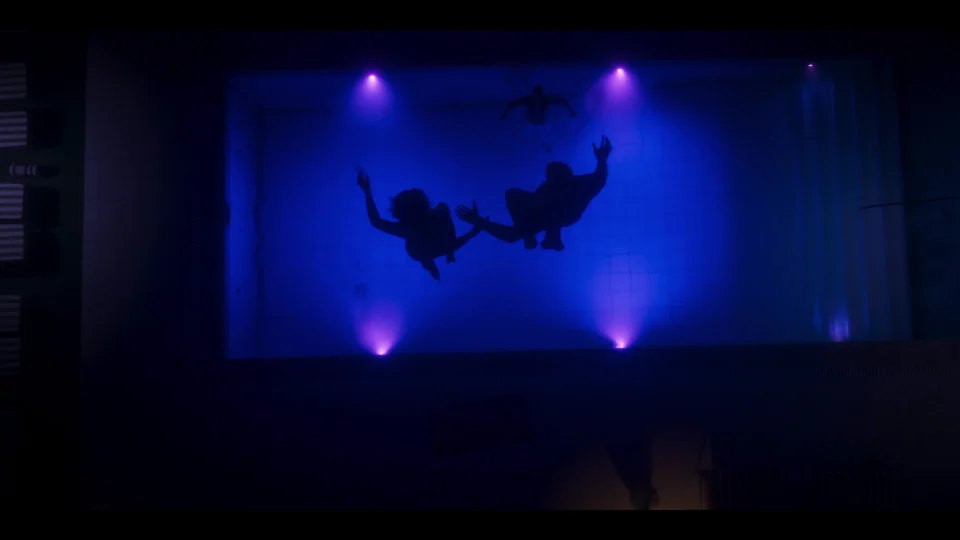
October trailer, 01:15.5. Look at the shift from blue to purple around the lights. This frame illustrates the color analysis.
That pool became the subject of color specialist Filippo Tarpini’s analysis. He pointed to the transition from bright blue into purple and suggested AgX, one method of tone mapping. Tone mapping converts a wide range of brightness and color values into an image a screen can display. Tarpini also showed that adjusting the levels around the lights makes steps in the gradient easier to spot.
His argument has an important limit: he explicitly calls AgX his best guess, and he analyzes the main trailer as SDR, an image with a standard brightness range. HDR allows a wider range, including detail in bright areas. An analysis of the SDR video cannot replace a test of the finished game’s HDR. Tarpini’s own color correction shows one possible alternative look, not a hidden “true” version of GTA VI.
What makes the image look soft?
“Blur” often groups several quite different effects together. To compare the graphics, it helps to ask exactly where clarity is lost.
Background outside the focus plane. In the marina phone call, skin, vest seams and the chain are easier to make out than the boats behind the character. This pattern is consistent with depth of field: the camera emphasizes subjects at one distance and blurs areas closer or farther away. An out-of-focus background alone does not prove that the boats have worse textures.
Light haze and halos. In the bright-window shot, softness is tied to the light. Dark silhouettes remain, but local contrast near the sun drops. Sharpening the picture would change its atmosphere even if the room’s geometry stayed the same.
Image reconstruction and anti-aliasing. Thin wires, hair and small leaves are difficult to keep stable on screen. Temporal methods use information from previous frames. A still frame and movement can therefore give different impressions: a detail may resolve, flicker or leave a trail. This general principle does not reveal which specific algorithm Rockstar uses.
There are limited measurements for the showcases themselves. For some frames of the October video, Digital Foundry estimates roughly two-thirds of 4K’s linear resolution, or about 1440p, allowing for the black bars. Its analysts also estimated rendering at around 1440p in selected Extended Look frames. These are estimates from published frames, not promises about a finished-game mode. DF also observes that the October edit avoids some long camera movements alongside thin fences and railings, where fine-detail breakup is easier to see. A different selection of shots could hide a problem even if the anti-aliasing method stayed the same.
Motion blur. A fast-moving object can look soft within an otherwise fairly clear scene. You need adjacent frames to assess it. One still image cannot distinguish an artistic motion trail from every other cause of lost clarity.
Video delivery. Compression and reuploads are particularly hard on small vegetation, smoke and moving surfaces. But it would be wrong to blame every defect on a social network. Digital Foundry noted that some instability in Extended Look’s fine detail remains in Rockstar’s large official file.
A fan-made version of the new trailer without blur is useful as a demonstration of how different the image can feel. Stronger edges make it look sharper, but do not prove that high-quality textures were disabled in the original or that the edit recovered every underlying detail.
Materials, reflections and shadows beneath the soft image
The marina close-up in the new trailer invites a comparison of several surfaces at once. Skin has a gradual highlight, bright points pick out the metal chain, and the vest reflects light differently while retaining visible seams. Despite the overall softness, these materials do not become one uniform, smooth surface.
In the marina view, white boat hulls, dark covers and the metal storage structure can be distinguished. The clarity of fine patterns may disappoint, but the three-dimensional objects and different responses of their surfaces to light are visible. These are separate qualities of the graphics. They do not automatically disappear when edges become less sharp.
The car bodies in the August drive work similarly. The surroundings reflected in a black pickup differ from its matte tire, while a bright highlight on a red convertible does not replace the body color altogether. Looking at these properties separately is more useful than simply saying the new frame is hazier: it lets us examine the material and the way the finished scene is displayed.
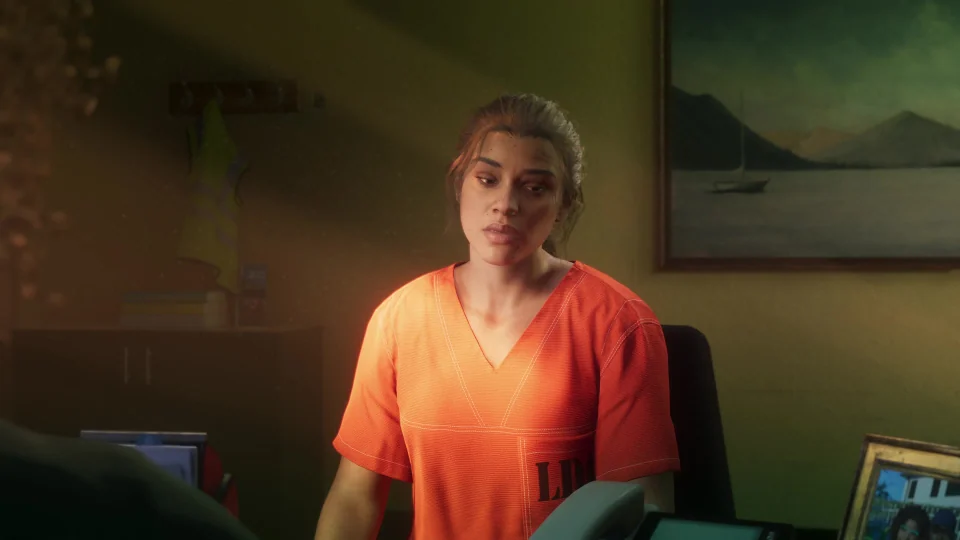
Complex lighting was visible as early as the first trailer. In its analysis, Digital Foundry highlighted an orange tint cast onto Lucia’s face by her prison uniform. This illustrates indirect light: a surface is partly lit by light reflected from another surface. The analysts saw signs of possible ray tracing, which calculates light paths, but retained alternative explanations. They also discussed reflections showing objects outside the main frame. It would therefore be wrong to date the first appearance of these effects to 2026.
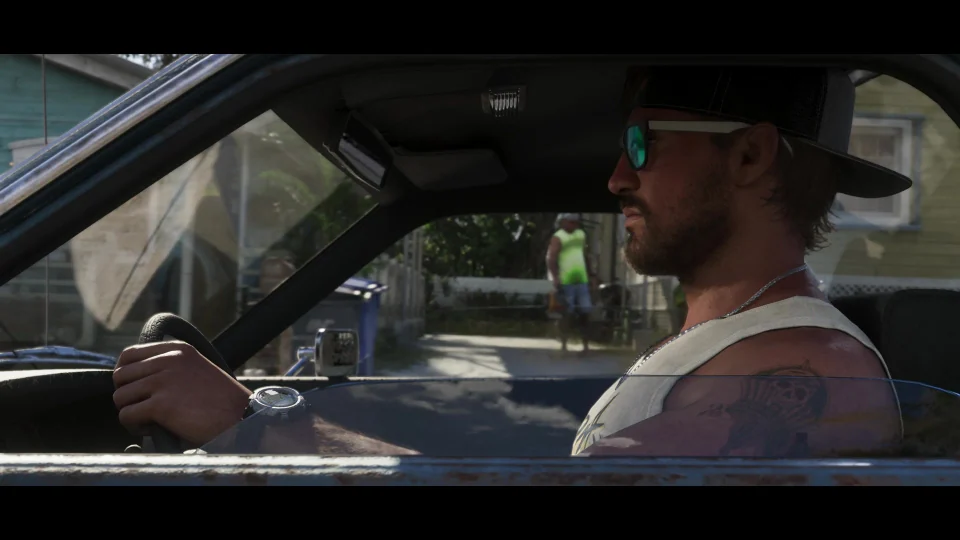
The second trailer provides a particularly clear example at 00:28. A partly lowered car window reflects clouds in the sky while also showing the interior and a hand behind the glass. Reflections of the surroundings appear in the glasses too. The window is neither an invisible plane nor a simple mirror: transparency and reflection work together. DF singled out this aspect of the second trailer as less apparent in the first. It is a clearer demonstration of a capability, not a confirmed date when that capability was introduced.
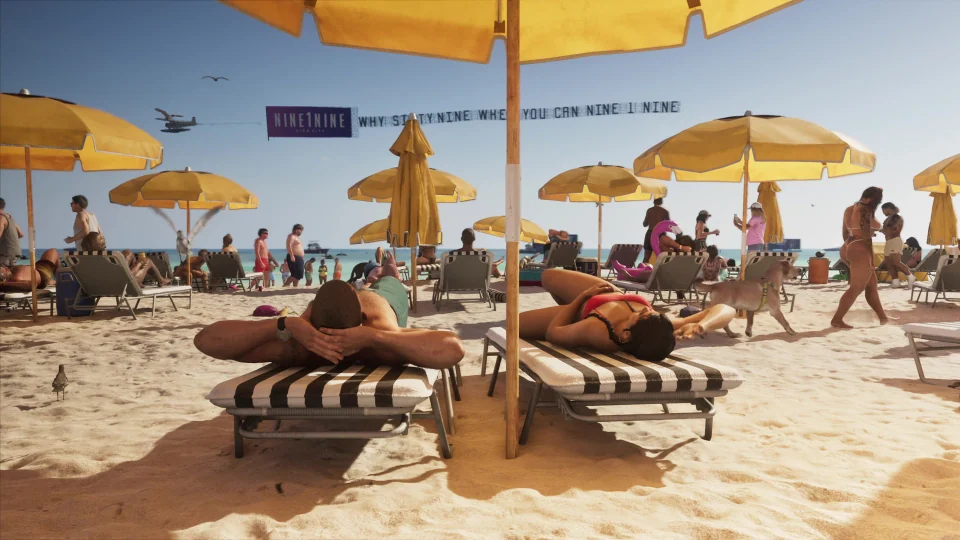
At 18:29.8 in Extended Look, another effect stands out: a yellow-orange beach umbrella lets colored light through, leaving a warm tint beneath it. DF discusses the moment while examining the lighting system. The value here is not how sharply the umbrella’s edge is drawn; the color of the fabric changes how the space beneath it looks.
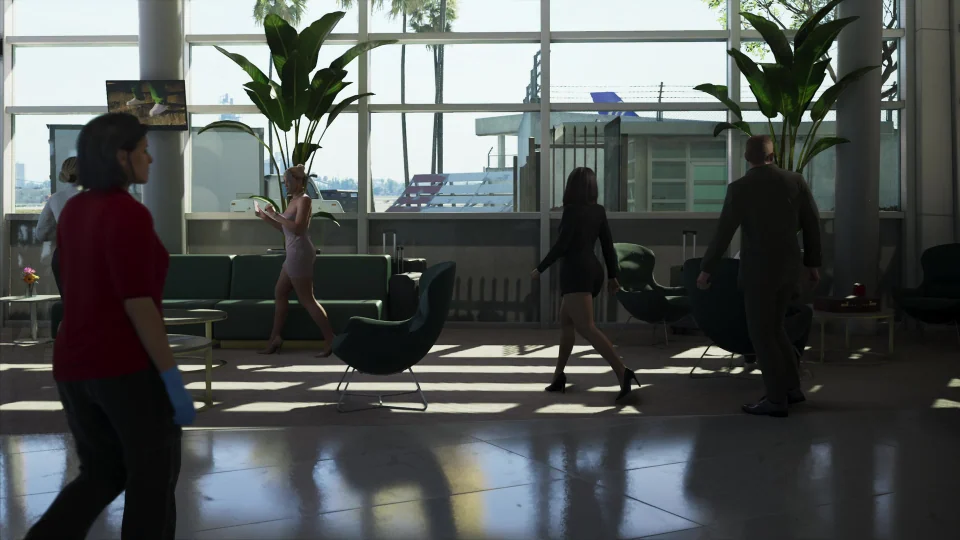
Another concrete example appears at 19:15. In a bright hall, shadows of window frames and chairs stretch across the floor. Softer reflected shapes and bright strips are visible in the tiles. Shadows locate furniture and people on the floor, while reflections convey the tile’s own properties. In the October marina, by contrast, the large separation between sunlit hulls and roof and the deep shade around the hangar and racks is more prominent. These are different lighting patterns, not the disappearance of shadows from the softer trailer.
A technical compromise persists across the showcases: DF found signs of shadow maps in the first trailer, and later in the second trailer and Extended Look. Shadow maps calculate shadows separately from tracing the paths of light; they can show stepped edges or imperfect contact with an object. In its August analysis, the team notes cleaner shadows than in the first showcase, but also noise and temporal trails in some lighting effects. The result is a more elaborate image that still makes compromises, rather than a shift to a system where everything is ray traced.
World detail: look beyond the main subject
It is easy to overstate the differences if one video is remembered for a wide street and another mostly for close-ups. To assess the world, look separately at the foreground, middle distance and horizon.
In the Extended Look daytime drive, the car body and road fill the foreground. Cars, pedestrians and trees lie farther away, and the neighborhood continues beyond them to the next intersection. The density comes from these layers together: markings, wires, facades, traffic and vegetation. One soft-looking tree canopy cannot describe the quality of the whole scene, any more than one exceptionally crisp car can.
The new trailer’s marina offers a good specific example. Boats and racks sit below; houses and trees continue beyond the hangar, with water and vessels farther away. The soft treatment still retains several layers of depth. Small objects are less distinct than on the bright August street, but the large structures do not merge into a flat backdrop.
For water, Extended Look at 17:25 is useful. Trails spread behind the jet skis, ripples break up the surface, and a bright path of sunlight changes against the dark water. At the pool in the new video, colored lights and smooth transitions of blue come to the fore. Motion and highlights are more apparent in open water; the distribution of artificial light draws attention in the pool. These are different water conditions, with no established switch from one rendering method to another.
First trailer, 00:24

Extended Look, 17:25
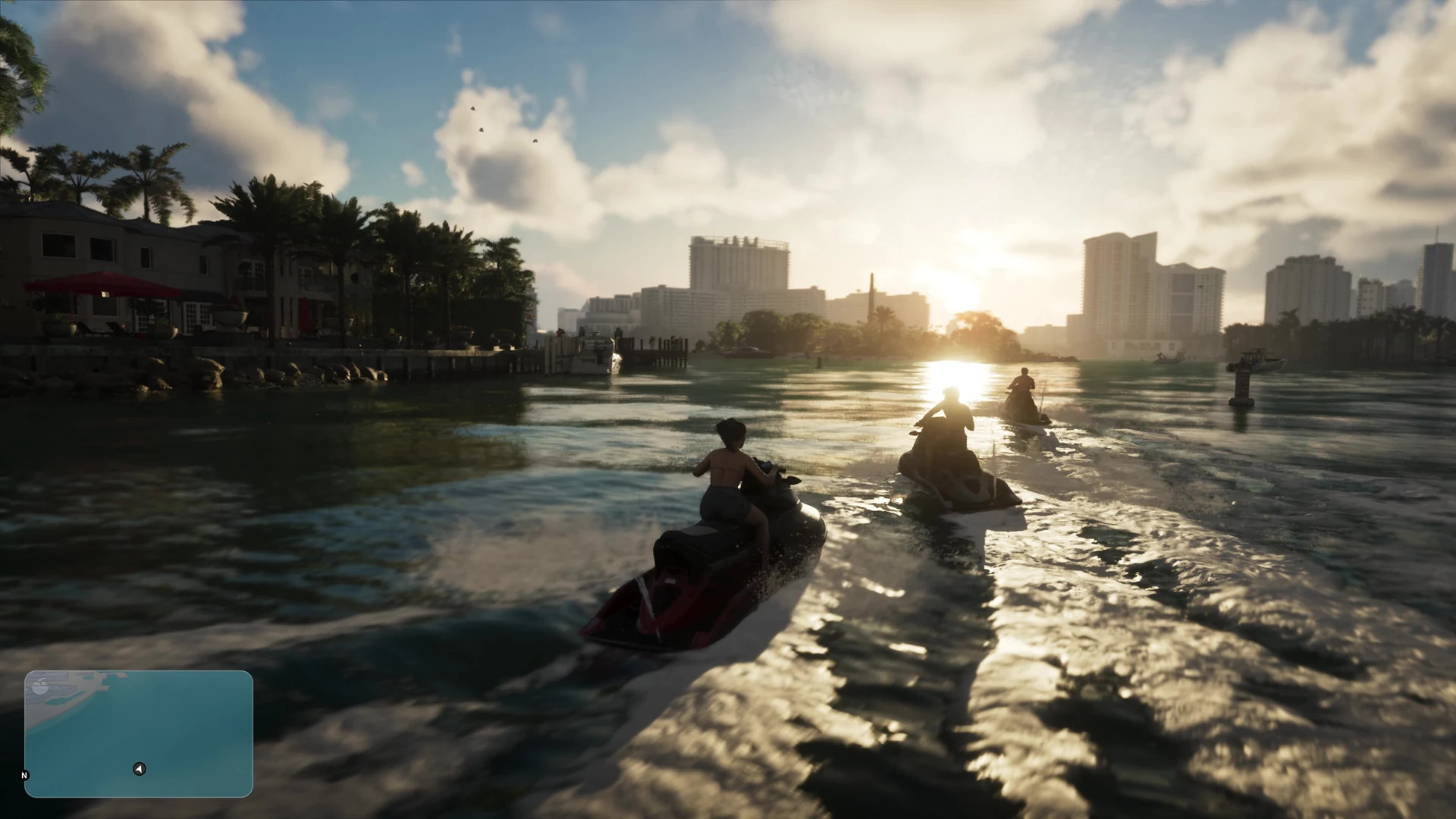
Waves and wakes from moving vehicles appear in both scenes. The water is light turquoise in 2023, while the path of sunlight stands out more strongly on dark water in 2026. The different sun and camera angle affect the image; this pair does not establish a specific change in water technology.
The early trailers also test our memory. The first trailer’s panorama around 00:32.5 already combined dense buildings, many light sources, cars and water. The world’s complexity did not arrive in one 2026 update. Later showcases give us more time and a wider variety of conditions in which to see how these elements work together.
Movement reveals things a beautiful screenshot can conceal. In the August material, DF points to level-of-detail transitions: as distance changes, a more or less detailed version replaces an object, and the switch can be noticeable. Small features also flicker. In selected October panoramas, the analysts do not find the earlier unevenness in camera motion. The image moves more smoothly, but this is an observation about the video, not an FPS measurement or a guarantee that the whole game has been fixed.
Have the graphics become worse?
The strongest difference between the selected August and October frames is in how the image is presented. Diffuse light, soft edges and glow feel stronger in the new trailer. In some places, that makes fine detail harder to read. A preference for Extended Look’s higher-contrast image has an understandable basis: some objects stand apart more clearly there.
These pairs do not, however, establish an overall technical downgrade. The new video’s close-ups still show distinct materials, skin and clothing detail, light transitions and a populated environment. We do not have the same scene captured in the same weather with the same camera and known settings, which would let us trace the loss of a specific detail.
The repeated green-convertible sequence from the second trailer and the August 17, 2026 PlayStation ad also shows a simpler change in presentation. Seat upholstery, windshield frame and the dense network of wires overhead remain in both versions. The ad removes the black bars and changes the frame boundaries. The background and highlights do not match because the moment of movement differs, so this pair primarily demonstrates a change in framing.
Across the compared scenes, the picture has several parts: bright October areas merge more with their halos, small objects on the August street stand apart more clearly, and differences between skin, fabric and metal remain readable in the new video. The earlier showcases add indirect lighting that was already apparent and increasingly clear examples of reflections in glass. Reducing the graphics to a single “sharpness” setting misses too much.
For a first look, start with these moments:
| What to watch | Source and time | What to notice |
|---|---|---|
| Daytime street | Extended Look, 08:33 | Road markings, canopy shadows, car surfaces and scene depth |
| Rooftop conversation | Extended Look, 12:17 | Contrast in the foreground and a soft distant city |
| Marina | New trailer, 00:06.5 | White boats, covers, glow and how distinct small objects look |
| Phone call | New trailer, 00:12.7 | Skin, metal and fabric against softer surroundings |
| Bright window | New trailer, 00:37 | Light halo, outlines and streams of water |
| Jet skis | Extended Look, 17:25 | Ripples, wakes and sunlight reflections |
| Pool | New trailer, 01:15.5 | Blue and purple near the lights |
| Car window | Second trailer, 00:28 | Clouds in reflection and the interior behind the glass at the same time |
| Beach umbrella | Extended Look, 18:29.8 | Lit fabric and the warm tint beneath it |
| Bright hall | Extended Look, 19:15 | Long shadows and soft reflected shapes on the tiles |
For your own comparison, use the official files without sharpening or color corrections, compare one feature at the same image size, and check several seconds around each still frame.
The exact settings, internal resolution and HDR quality of the finished game will require separate tests after release. A video’s 4K label describes its file dimensions, not a guaranteed game rendering resolution. The published showcases already let us discuss the character of the graphics in detail; they should not be turned into an unsupported specification for the game.
Sources
- Rockstar Games: first trailer, second trailer, An Extended Look, October 15 trailer. Showcase dates and original video material.
- Take-Two press release about the second trailer: confirmation of PS5 capture. September 19, 2022 SEC filing: status of the early recordings.
- Digital Foundry: Extended Look analysis, especially 27:11-35:17 and 44:12-51:20; new trailer analysis, especially 02:00-04:01 and 11:12-12:50. Technical observations with the analysts’ qualifications.
- Digital Foundry: first trailer analysis, 07:13-08:46 and 11:10-18:15; second trailer analysis, 07:09-17:15 and 22:52-24:20. Early signs of lighting, transparent reflective surfaces and shadow compromises.
- Filippo Tarpini’s original color analysis: the pool argument and tone-mapping hypothesis.
- PlayStation Blog, It Happens on PS5: official ad featuring the repeated moment.
- Reference definitions: Epic on image post-processing and AMD GPUOpen on temporal reconstruction. These documents explain general principles; they do not confirm the use of Unreal Engine or FSR in GTA VI.