NPCs in GTA 6: conversations, personalities and how residents behave
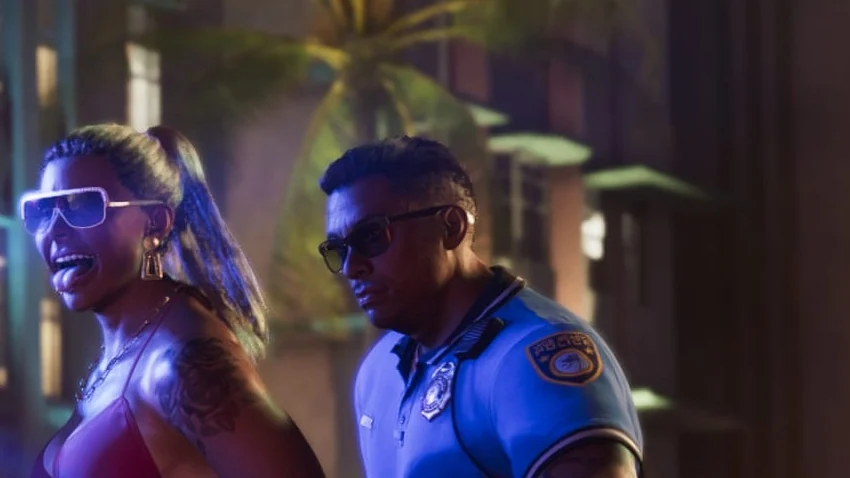
In GTA 6, you can greet or provoke NPCs using interaction options provided by the game. Their response depends on your actions and the situation. Residents notice unwanted attention, move away from an armed person, may resist a robbery and can report a crime. That picture comes from Rockstar’s demonstrations and developer interviews. Here, NPCs, or non-player characters, mainly means pedestrians, drivers, shoppers and other people controlled by the game.
The first detailed accounts from journalists were supplemented by Edge’s October report. Developers describe a world that responds to what the two protagonists, Jason and Lucia, do, while writers recount specific encounters. These accounts already explain how interactions with residents work. They describe preset approaches and the reactions to them. The sources examined here have not disclosed free-form voice conversations with every resident or a complete day-to-night life for every person.
You can greet a passerby or pick a fight
The option to greet someone or offend them with a rude remark, familiar from Red Dead Redemption 2, returns. In his own account of the GTA 6 presentation, TGG writes that these approaches are available for any NPC. This gives players a way to initiate contact without punching or shooting. He does not provide the full control scheme or a list of responses for each kind of person.
Actions without words can also prompt a reaction. Rob Nelson, one of the leaders of Rockstar North, discussed groups whose conversations players can overhear. Get too close or linger too long and people may notice, become aggressive or try to leave. These comments appear in GamesRadar’s account of Nelson’s IGN interview.
Edge’s report offers a vivid example. Nelson kept Jason’s gaze on a man with a dog. The owner took offense and unclipped the leash. Nelson ran; the dog chased Jason for a while, then returned to its owner. A routine walk became a small incident without any selected mission.
Edge also explains what shapes a resident’s response: temperament, aggression, location, what the person has seen and how the player has treated them. The same rude gesture therefore need not produce the same scene every time. The dog story illustrates one possible outcome of a particular encounter.
People react to a gun before the first shot
According to TGG’s observations and conversation with Nelson, residents care how a protagonist carries a long gun. A weapon on the back usually causes less alarm than one in the hands. Holding it in both hands, ready to fire, raises the tension. Police officers may issue a warning.
TGG describes a reaction that initially looks calm: Jason walked past a group with his weapon lowered, people began to move away and only then sped up. Pointing a gun at someone may prompt flight or an armed response. Reactions go beyond a single street-wide panic.
This also applies to people caught near someone else’s shootout. On Vice Beach, TGG saw residents who could not flee safely hide behind police cars, walls and benches. Taking cover lets them wait out the danger while the protagonist continues fighting.
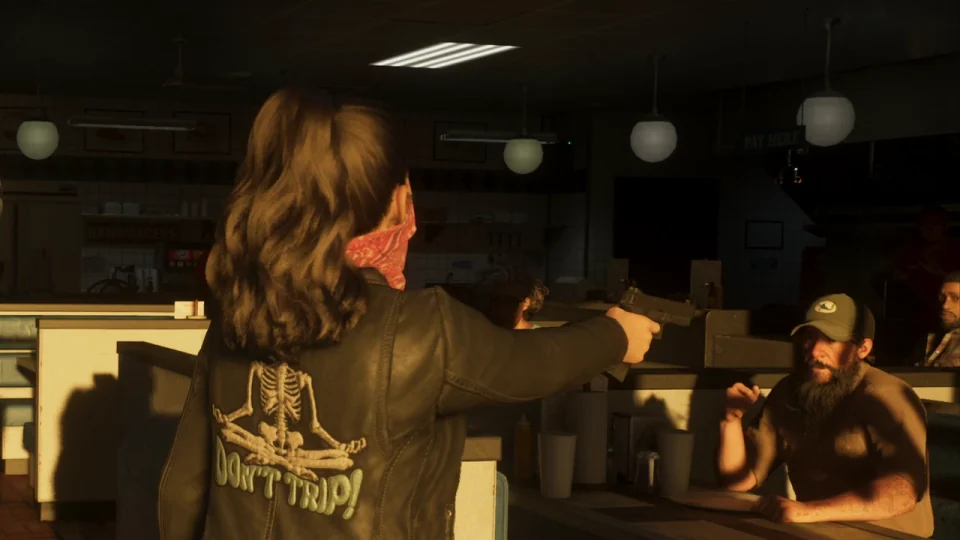
People a player sees as easy targets may resist too. Nelson told Famitsu that shouting is sometimes enough to make a driver leave a car. Another driver may refuse, and another may open fire. After a carjacking, its owner may call the police. The player must decide on the spot whether to press on, retreat or look for another target.
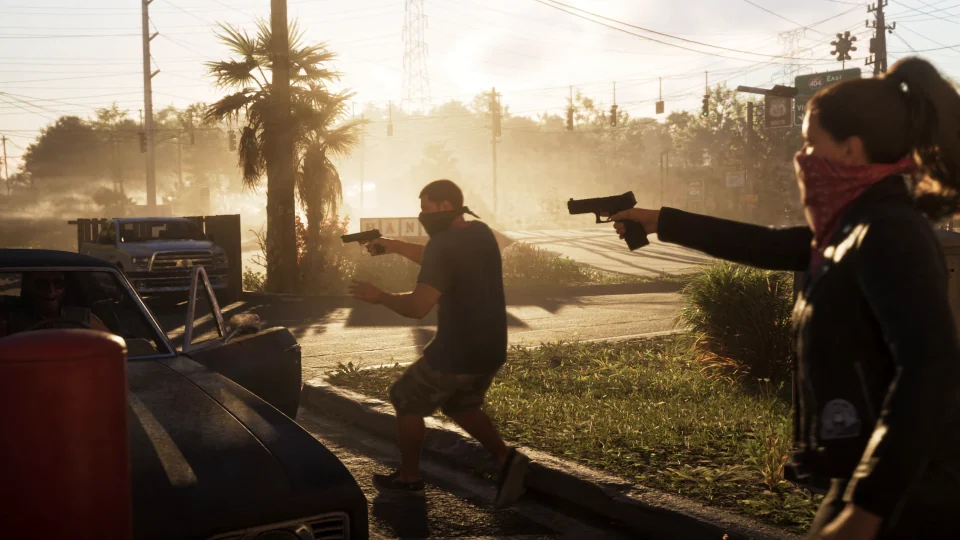
Shots fired near an opponent may buy time to get away. In Famitsu’s interview about suppressive fire, Nelson explains that such shots can frighten or disorient someone and hold them in place. He connects this with the possibility of escaping without killing police officers or civilians.
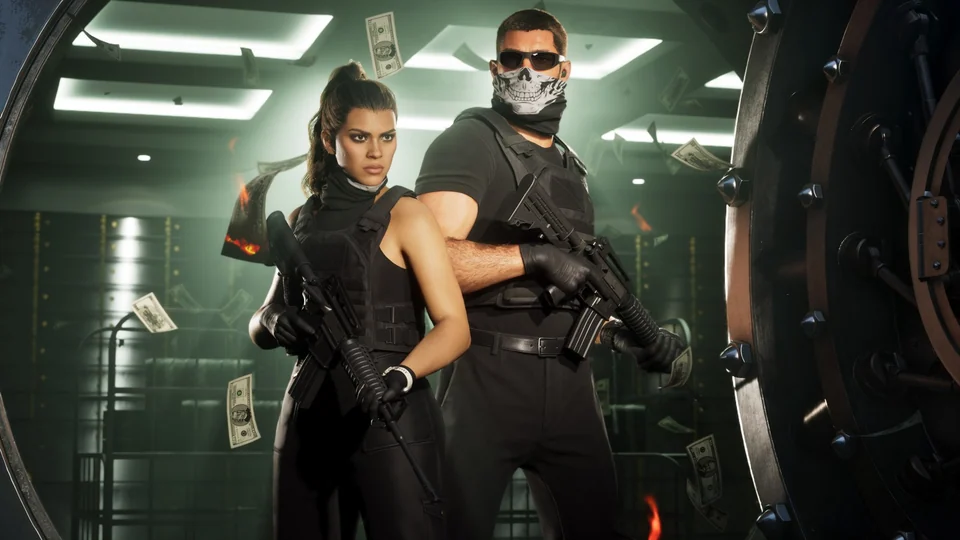
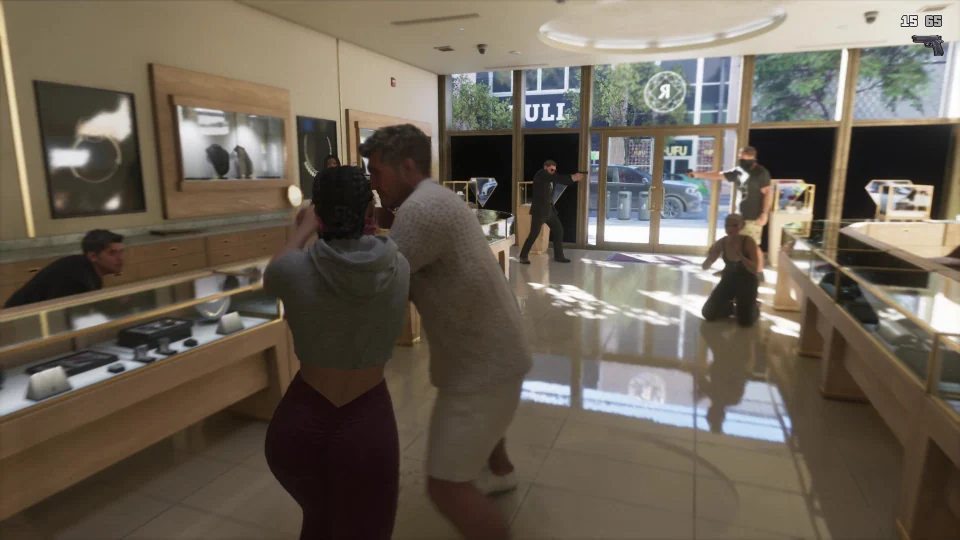
Shops bring similar uncertainty: TGG repeatedly saw cashiers, guards or customers try to intervene in a robbery. Players therefore have to watch the people nearby, not just their intended victim. The full preparation for a heist belongs in our separate guide to robberies.
What Leonida’s residents do
Leonida, the fictional state around Vice City, is home to different communities. In Dazed’s feature on building the world, the team describes trips to Florida and conversations with locals, promoters, former criminals and police officers. This research helped shape clothing, mannerisms and cultural details in different places.
Island leisure, beach crowds and the city’s nightlife consequently have their own looks. People provide both a sense of place and small stories that arise along the way. In Christopher Byrd’s New York Times report, republished by The Star, he describes a passerby with a dog and people on treadmills as Nelson takes Jason into a gym.
Residents can initiate encounters themselves. El País’s report describes people who approach to flirt or try to rob the protagonist. The reporter also saw an incident between other characters: a detainee escaped from a police car and an officer accidentally hit a colleague with a taser while trying to stop her. The woman disappeared into the crowd. A passerby can find something worth watching without having spoken to anyone.
Activities can also change with the conditions. Edge writes that pedestrians seek shelter when the weather worsens.
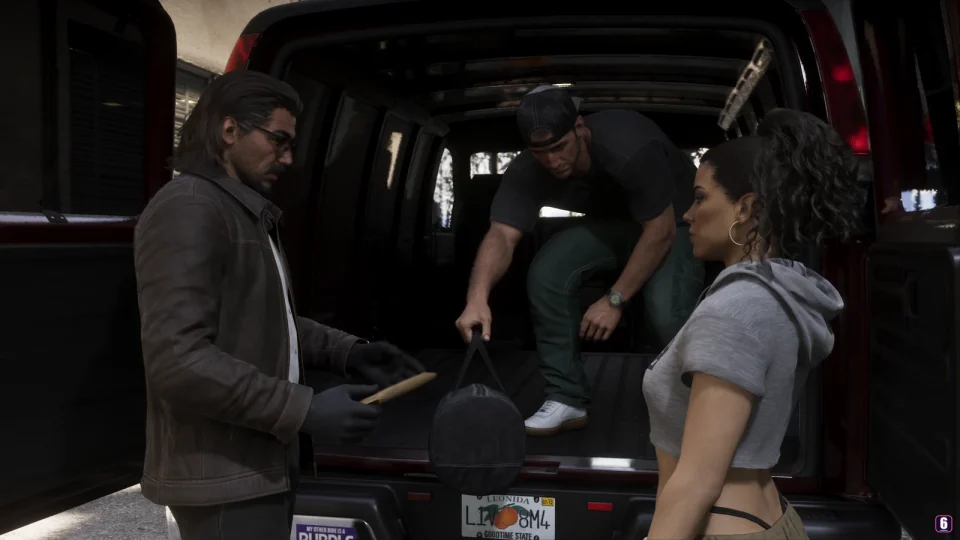
What residents say may matter too. In TGG’s account, Nelson mentions people who may ask for a favor and offer a lead, contacts from the story, and discoveries made while walking around. Some ways to earn money open up through such encounters.
The phone offers another way to learn what is happening. According to the same account, NPCs post on the game’s social network, and players can travel to some events from the feed and find them in the world. This links the smartphone screen to city life. TGG is talking about some posts, not claiming that every video is always filmed near the player in real time.
Why the crowd looks more varied
Nelson told Famitsu that Rockstar paid more attention to residents’ height and build. The aim is more natural variety, so identical faces are less conspicuous on every walk. He does not claim there are no repeated models at all.

The New York Times report also describes a dedicated team of writers, directors and producers in Los Angeles. Rockstar is making more developed residents and selecting their appearances by hand instead of merely assembling a crowd at random from body and clothing parts. Rupert Humphries explained the dialogue work in an interview with LOVE: a separate team in Los Angeles writes lines for passersby. Overheard remarks help make the city feel inhabited by people with lives of their own.
The animation count needs careful wording. In NYT/The Star, Rockstar cites more than 600,000 animations for GTA 6, while Edge associates around 600,000 with NPCs. The publications describe the scope of that number differently. Either way, it represents a large amount of work on movement. It cannot tell us the number of map residents, dialogue variants or unique daily routines.
How the world responds to the protagonists’ actions
Residents’ behavior is tied to the consequences of crime. According to Nelson’s explanation in Famitsu and TGG’s account, a witness may report an incident. In other cases an alarm or a vehicle tracker alerts authorities. The police then act on the descriptions they receive. A person’s phone call is one route to a wanted response.
The broader pattern of behavior is also considered by the Criminal Profile system. In a direct interview with Famitsu, Nelson contrasts a restrained, professional criminal with someone who repeatedly uses needless violence. The surrounding world can respond to that aggression. The discounts for good behavior familiar from RDR2 should not be assumed here.
There is a limit to what this says about NPC memory. Police descriptions and the Criminal Profile describe systems of consequences. They do not, by themselves, reveal whether any random passerby would recognize Jason several in-game days after an earlier argument. A shared personal memory across all residents remains a separate question.
Routines and AI: what still needs checking
We do have information about daily life for specific characters: Famitsu relays Nelson’s comments about the activities of the other protagonist while the player is not controlling them, and the routines of people at a safehouse. This does not reveal whether every passerby has a home, job and route that persist away from the player.
The striking claim that Rockstar is “ten years ahead” has a different origin. GamesRadar reported a post by IO Interactive programmer Berkay Dursun, who commented on crowds based on available videos. This is an outside specialist’s opinion, not a test of the full GTA 6 game or a published Rockstar measurement.
There is a separate statement about generative AI. In February, Insider Gaming reported Strauss Zelnick’s statement to GamesIndustry.biz that generative AI has no role in creating GTA 6. He was speaking about development of the game. Pedestrian behavior can still follow its own game rules and conditions for reacting.
As of November 2, 2026, the Famitsu, Edge and Dazed interviews, the NYT report and TGG’s account examined here do not disclose free-form voice conversations with every resident, a universal duration for personal NPC memory or an exact population count. Interaction options, varied personalities and reactions have been described in concrete terms. We will have to assess the completeness of daily routines and the reliability of these systems in the released game.
Sources
- Edge: The state that never sleeps, Rob Nelson’s gameplay demonstration, residents’ personalities and reactions, and the effects of weather.
- TGG: My entire GTA 6 preview, summarized, the author’s own account of interactions, weapons, witnesses, social media and leads.
- Famitsu: interview with Rob Nelson, drivers, suppressive fire, resident variety, Criminal Profile and safehouse routines.
- The New York Times in The Star: The grand ambitions of Grand Theft Auto VI, Christopher Byrd’s report, the NPC team and animations.
- Dazed: exclusive look at GTA VI, Florida research and residents’ cultural context.
- GamesRadar: evolving NPC interactions, an account of Nelson’s IGN comments on eavesdropping and personal space.
- GamesRadar: Berkay Dursun’s opinion, the origin of the comparison with other games.
- Insider Gaming: statement on generative AI, an account of Zelnick’s position given to GamesIndustry.biz.
- El País: Jorge Morla’s report, encounters initiated by residents and the police incident.
- LOVE: Is this the American dream?, Rupert Humphries’ direct account of writing pedestrian dialogue.
- Rockstar Games: An Extended Look, source of the cover and stills at 11:34, 11:38, 18:00 and 18:29. Images by Rockstar Games.