How long has GTA 6 been in development, and why do estimates differ?
How many years has GTA 6 been in development? Nelson dates its start to 2015, Take-Two marks 2020, while RDR 2, design work and two delays shape the timeline.
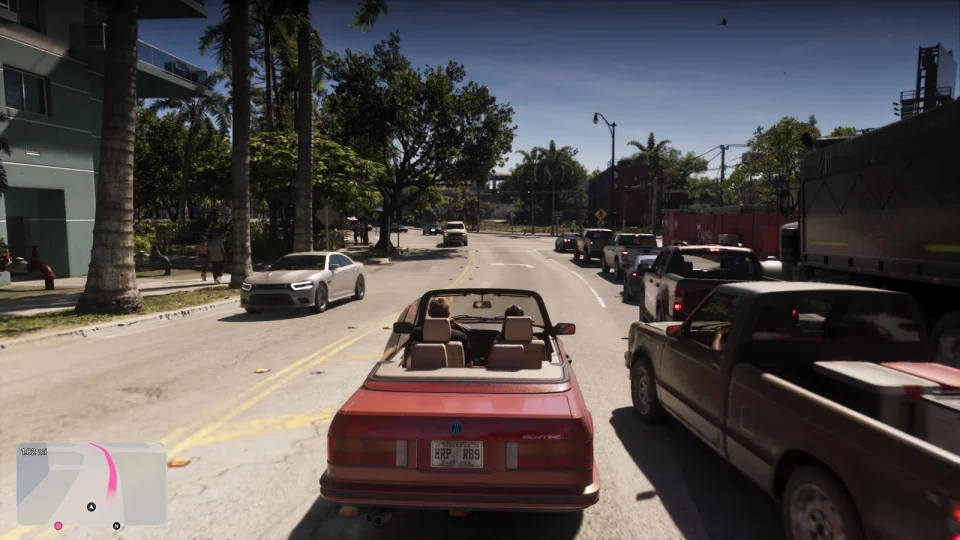
According to development lead Rob Nelson, work on GTA 6 began in 2015. By October 2026, that is about eleven years, including early preparation. Publisher Take-Two separately points to 2020 as the year development began “in earnest.” These dates describe different stages of the project. Below, we compare Nelson’s direct interview with TROISCOULEURS, company documents and accounts by journalist Jason Schreier, who visited Rockstar North and spoke to developers.
When did GTA 6 development begin?
The question sounds simple until we ask what counts as the beginning. The sources distinguish between an initial idea, a small group’s work on the map and the involvement of a large team.
| Starting point | What it describes | How to read the duration as of October 2026 |
|---|---|---|
| 2014 | Bloomberg mentioned early work in 2022 | About twelve years since the earliest stages |
| 2015 | Development began, in Nelson’s own words; Schreier describes early trips and map work | About eleven years including early preparation |
| After Red Dead Redemption 2 (RDR 2), released in 2018 | Most of the team joined, according to Nelson; Schreier describes broader work from around 2019 | Roughly seven to eight years, without a precise transition month |
| 2020 | Take-Two’s official wording says work began “in earnest” | Roughly six years from this milestone |
| February 2022 | Rockstar publicly confirmed that active development was already well underway | The date of the statement, not the start of the project |
The official basis for counting from 2020 is Take-Two CEO Strauss Zelnick’s prepared remarks of May 15, 2025. He explicitly named that year and used the phrase in earnest. Schreier’s approximate 2019 milestone and the publisher’s 2020 date do not set exact boundaries between stages.
The publisher did not explain which internal transition that phrase refers to. It cannot be turned into a claim that “no one worked on GTA 6 before 2020.” The document describes an increase in work after the success of Red Dead Redemption 2. It does not erase the earlier years of world planning, discussion and research.
The same applies to Rockstar’s February 4, 2022, announcement. The company confirmed then that active development of the next game was already well underway. Counting only from that announcement would discard the work that the announcement itself acknowledged.
Why thirteen years since GTA V is not thirteen years of production
GTA V came out on September 17, 2013. More than thirteen years had indeed passed by October 2026. For a player waiting for the next numbered installment, that is an understandable way to count. It tells us too little about production, though: the time between releases does not show how many people worked on the new game or what stage they were working on.
Between the two GTA games, Rockstar released Red Dead Redemption 2 on October 26, 2018. According to Schreier, its scale drew most employees and executives onto that project. Some artists, however, continued working on GTA 6’s map. The entire early period can be described neither as full production by the whole company nor as a time when no work on the next GTA took place.
Resources shifted gradually. On July 7, 2022, Rockstar said it had been steadily moving more development resources toward the next GTA over the preceding years. The company linked this to a change in support for Red Dead Online: instead of the previous large themed updates, it would build on existing modes. The statement supports a gradual ramp-up, but gives neither a team size nor the date on which every employee switched projects.
That is why estimates differ. One artist might have spent more than ten years on the world, while a specialist who joined after RDR 2 spent considerably less time on the project. Adding those periods together, or applying the longest individual’s tenure to the whole team, would be a mistake.
How Rockstar sought a balance between realism and GTA’s pace
Some of the time went into decisions players might never notice in the finished game. Schreier describes a difficult period from roughly 2019 to 2022, when Rockstar sought a balance between RDR 2’s detailed realism and GTA’s familiar, faster pace.
The weapon system is one example. Developers wanted to limit what players could carry, but worried that a weapon wheel with empty slots would keep reminding them of unavailable guns. They tried other interfaces for months, possibly years, before returning to the wheel. We examine that episode in more detail in our report on the almost abandoned weapon wheel.
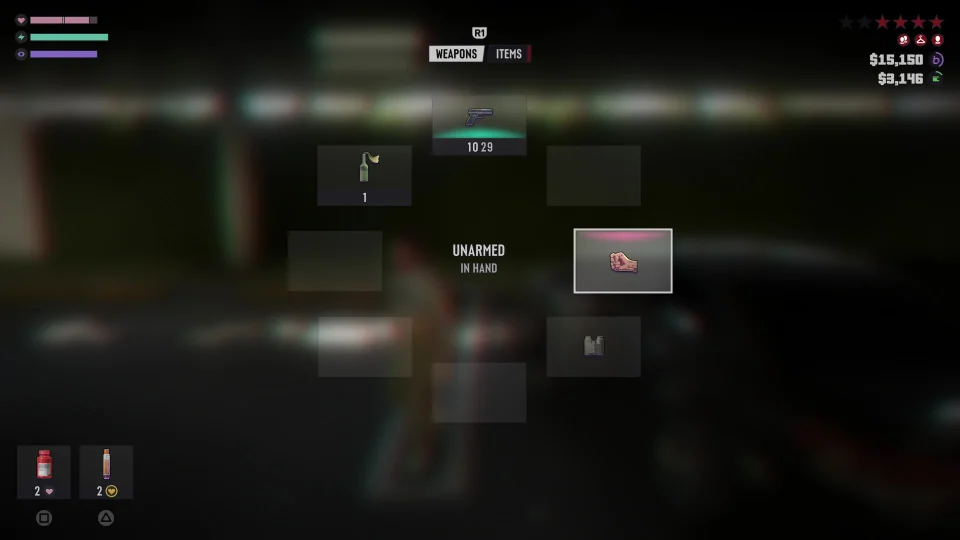
This does not mean that a single menu delayed the release by several years. The source describes how long the experiments lasted, not their contribution to the overall delay. It does show how a familiar on-screen element can conceal extensive exploration and discarded alternatives.
In Schreier’s account, some designers left because they could not see progress. Around late 2022 or early 2023, the team began to develop a more coherent sense of the game. The first trailer in December 2023 helped give the team a shared reference point. Nelson also explains the trailer’s role in bringing the vision of the future game together in TROISCOULEURS. These are approximate milestones, not announced dates on which internal stages were completed.
Changing design decisions also does not establish that GTA 6 was completely restarted. A claim that “everything was thrown out and development began again” needs a separate source. The existence of different stages alone does not justify that conclusion.
Building the world meant working on every street
An early GTA 6 concept called Project Americas envisaged a broader geographic scope. Later, the project focused on a fictional Miami and its surroundings. Narrowing the initial concept did not make the city simple to build.
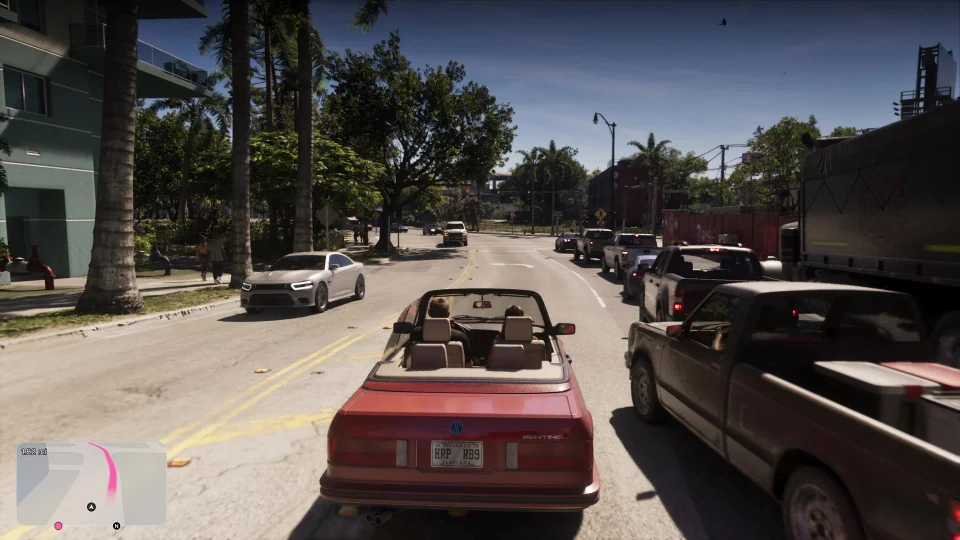
Development lead and art director Aaron Garbut told Schreier that GTA 6’s roads were designed to be narrower and its traffic denser from the outset. Denser construction followed. A decision about how players would drive down a street increased the amount of work around it.
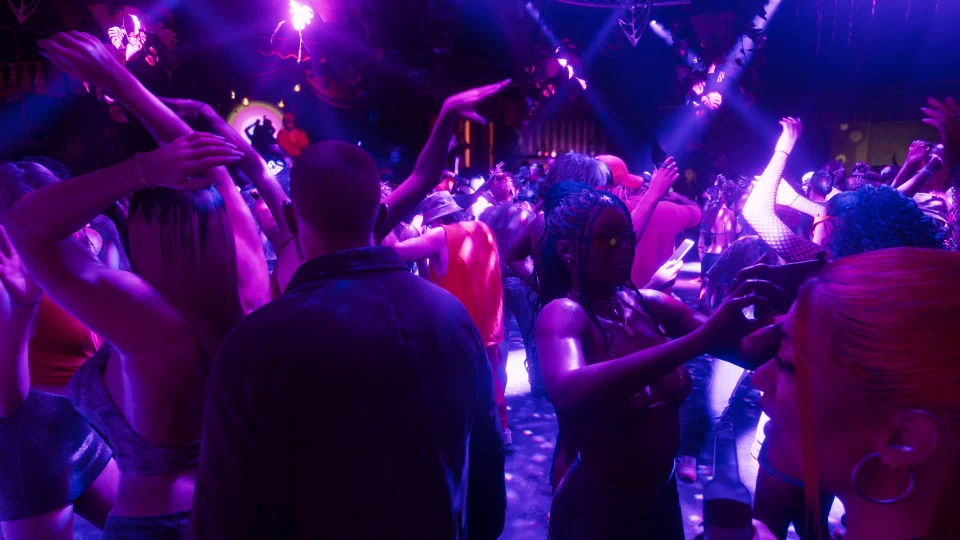
Another example from the interview is a nightclub. It needs the behavior of its patrons, music, lighting and synchronization of the lights with the rhythm. Such connected details help explain the time involved, although there is no public accounting of the months spent on each object.
Comparing map area alone therefore says little about development time. What matters is what fills that space and how many interconnected elements have to be brought into working order.
The pandemic and changes to the team
According to Schreier, the pandemic disrupted work while the game was still taking shape. He also describes Rockstar nearly doubling in size, problems with coordination and attempts to plan more precisely. The company’s total headcount is not the number of people who worked continuously on GTA 6.
After RDR 2, management sought to reduce severe overwork by changing planning and compensating extra work with time off. The journalist also heard accounts of overtime on the new game, so it would be wrong to say that the problem was completely solved.
Views of management differed as well. Some employees considered the decisions of three executives insufficiently coordinated; Nelson disagreed with that assessment. That distinction matters when describing production difficulties without making a definitive accusation of chaos.
Neither the pandemic nor the team reorganization has a verified, separate count of how much it delayed GTA 6. These circumstances cannot honestly be turned into a formula such as “one year for remote work, two for management and another for the map.”
Did the 2022 leak affect the schedule?
After Rockstar was hacked in September 2022, early material from the next GTA appeared online. It was a difficult event for employees, but its effect on the schedule requires separate evidence.
Take-Two filed an official Form 8-K on September 19. It said work would continue as planned and Rockstar did not, at the time, expect a long-term effect on development timelines. This is a dated company assessment, not an independent measurement of every consequence.
There is no basis for attributing the later delays to the hack. At the same time, the 2022 statement does not prove that the incident had no effect whatsoever on production. Nor can unfinished footage establish what percentage of the entire game had been completed.
What changed with the two delays?
Rockstar’s first trailer in December 2023 gave a 2025 release window. Take-Two later narrowed it to fall 2025. Two official changes followed:
- On May 2, 2025, Rockstar announced a May 26, 2026, release. It said the extra time was needed to deliver the expected level of quality.
- On November 6, 2025, the company moved the release to November 19, 2026. The statement again cited the time needed to finish and polish the game.
In Schreier’s fall account, executives explained the delays as the result of parts of the work finishing at different speeds. He describes technical and communication problems; Phil Hooker, another development lead, spoke about continuing changes. These are the views of people involved in production, not an independent accounting of the causes of delay.
The announcements confirm changes to the public schedule. They do not reveal the internal date designers originally expected or provide a complete breakdown of remaining tasks. They do not support the claim that “the game was ready and was simply held back.”
As of October 24, 2026, the announced release is still ahead. Asking how long GTA 6 “took” to develop should not suggest that a completed release has already drawn a line under production. A precise final duration needs both a defined starting point and a confirmed end date.
What development time is accurate to cite?
By October 2026, the answer is about eleven years from the 2015 start named by Nelson, or roughly six years from Take-Two’s 2020 milestone. These figures include different stages and are not yet a final measure of production: the release is still ahead.
Several documented circumstances help explain the long cycle: Rockstar’s successive work on major games, its search for design solutions, the complexity of the world and the organization of production. The story cannot be reduced to one delay or one feature of the map. For more from the fall interviews, see our report on Bloomberg’s visit to Rockstar.
Sources
- TROISCOULEURS: direct interview with Rob Nelson, August 27, 2026: the 2015 start, the team’s involvement and the role of the first trailer.
- Rockstar: Community Update, July 7, 2022: the gradual increase in development resources devoted to the next GTA.
- Take-Two: prepared remarks for fiscal 2025 results, page 2: the official 2020 milestone.
- Jason Schreier: Why Grand Theft Auto VI Took 8+ Years to Make: production history and interviews with Rockstar executives.
- Jason Schreier: Some New Things I Learned About Grand Theft Auto VI And Rockstar: artists’ early work, roads and weapon wheel alternatives.
- Bloomberg: July 2022 report on GTA VI: the early 2014 milestone.
- Rockstar: Community Update, February 4, 2022: confirmation of development already in progress.
- Take-Two: September 19, 2022, Form 8-K: the company’s statement about the hack and its expected effect on the schedule.
- Rockstar: GTA V release date and the RDR 2 release post: the dates of the earlier games.
- Take-Two: move from fall 2025, Rockstar: May 26, 2026 and Rockstar: November 19, 2026: changes to the public release window.
- Rockstar: An Extended Look, August 27, 2026: footage at 08:33, 15:58 and 20:28.