Who is making GTA 6? The studios and people behind the game
Who makes GTA 6? Rockstar studios, Rob Nelson, Aaron Garbut, Phil Hooker and the writers, plus what is known about the thousands of contributors.

Rockstar Games is making GTA 6. Rockstar North in Edinburgh is a key development center, but the game brings together an international team. Rob Nelson, Aaron Garbut and Phil Hooker lead development. Other specialists create the story, dialogue, characters and technology, so its authorship cannot be reduced to one name. Direct Rockstar interviews, Take-Two documents and journalist Jason Schreier’s accounts after visiting the studio help identify the people behind it.
Rockstar Games, Rockstar North and Take-Two
These names have different roles. Rockstar Games develops and publishes GTA 6. Rockstar North is a Rockstar studio and a major center of work on the game. Take-Two Interactive owns Rockstar Games and also releases games through other labels.
So the answer to “who publishes GTA 6?” is Rockstar Games, with the qualification that it belongs to Take-Two. Take-Two itself should not be presented as a separate team writing missions or modeling cars.
Rockstar’s network extends beyond its Scottish office. Its Careers page lists North, Dundee, Leeds, Lincoln and London in the UK; New York, LA, New England and San Diego in the US; Toronto in Canada; India in Bengaluru; and Australia in Sydney, among others. Studio names do not always match their city: the Toronto office is listed in Oakville and San Diego in Carlsbad.
That list shows the company’s geography, not the division of GTA 6 work. It cannot establish which office made a particular mission, car or neighborhood. An opening at a studio is not proof that the studio works on this specific game, either. Rockstar has other responsibilities, including support for GTA Online.
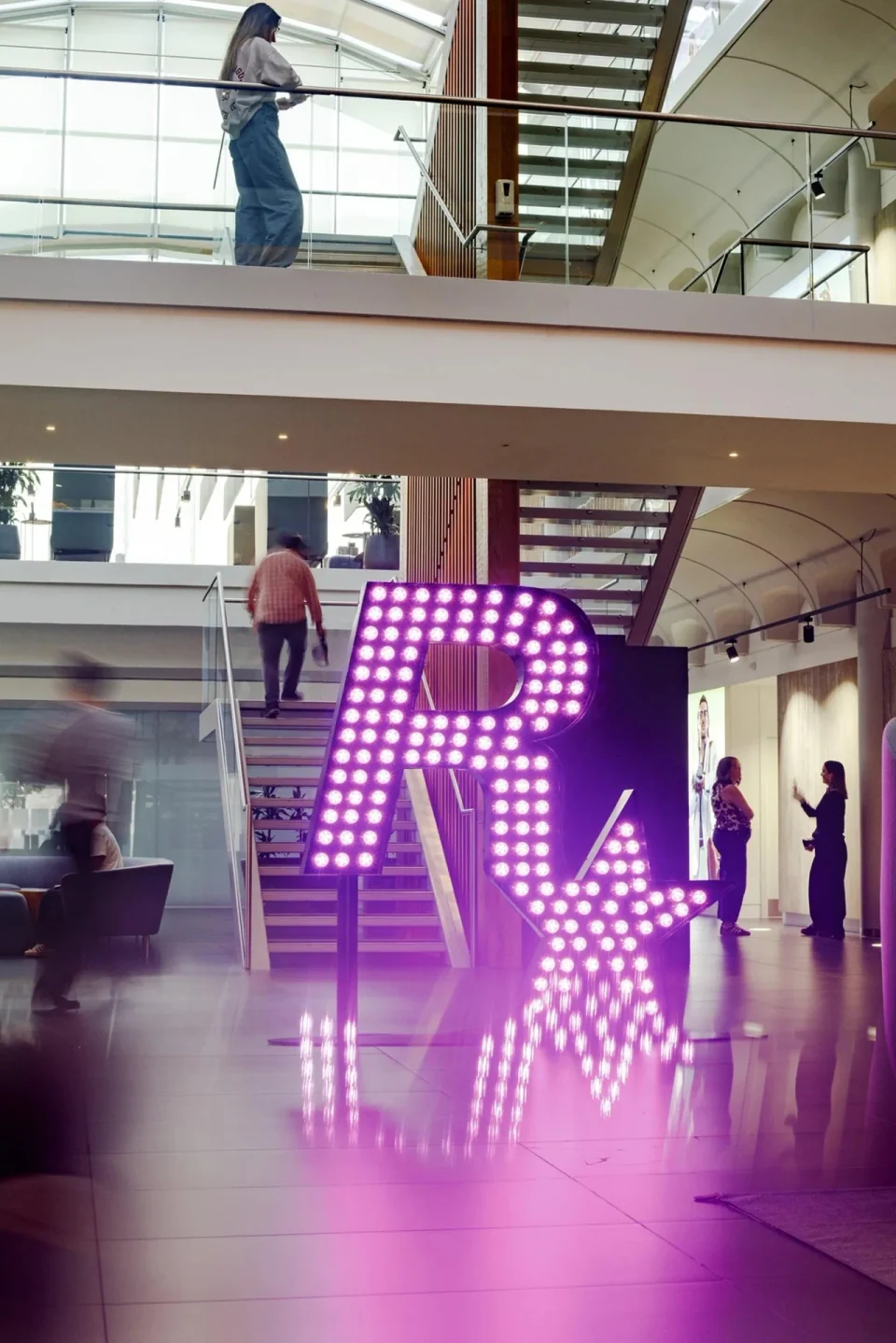
Photo: Robert Ormerod / Bloomberg Businessweek.
Who leads development?
According to Schreier, Nelson, Garbut and Hooker share the title of GTA 6 development lead. Each also has a distinct professional background and areas of work.
| Person | What is known about their role |
|---|---|
| Rob Nelson | A development lead and one of the heads of Rockstar North. He personally demonstrated the game to journalists and explained its design in interviews. |
| Aaron Garbut | One of the heads of Rockstar North and development leads, associated with the project’s art. |
| Phil Hooker | A development lead with a technical background, involved in decisions about the game’s systems and tools. |
| Sam Houser | Rockstar Games co-founder who presented GTA VI in its official announcement. His company role should not be confused with sole authorship of the script. |
Dividing GTA 6 into three independent territories bearing these names would oversimplify the work. How a protagonist interacts with a passerby, for example, involves writing, animation, controls and programming at once. The leads have to coordinate decisions across those areas.
Schreier also reported that some employees were frustrated by collective decision-making. Nelson disputed the idea that the three leads themselves were the problem. These are differing assessments of the workflow, not evidence that the game lacks an overall vision.
Who creates GTA 6’s story and characters?
The full LOVE interview names several people directly involved with the characters and narrative:
- Rupert Humphries, senior vice president of narrative.
- Elizabeth Govie-Kern and Alexa D’Agostino, writers on the game.
- Michael Kane, Rockstar’s vice president of art, dynamic. In the interview, he explains how characters’ appearance is created.
Humphries describes more than the main story. A separate Los Angeles team writes pedestrian dialogue, while writers of ads and comedy material work in New York, Los Angeles and London. Schreier says Rockstar set up a separate Los Angeles studio with writers, directors and producers to work on NPCs, the characters controlled by the game. A line heard on the street and a story conversation can therefore come from different groups that still need to give the world a consistent voice.
Govie-Kern stresses the contribution of the actress playing protagonist Lucia to the character. D’Agostino describes drawing on women she knows when writing a character. Kane connects the variety of residents to clothing, hairstyles, makeup and other visual details. Characters emerge from writing, performance and art together.
These are only some of the confirmed contributors to GTA 6’s story and characters. Performers are covered in our article on actors and voice work, while music is covered separately in our article on Justice and the soundtrack.
How many people have worked on GTA 6?
Thousands of people work on GTA 6, but Rockstar has not publicly disclosed an exact team size. That is what Take-Two CEO Strauss Zelnick’s August 7, 2026 GamesBeat interview establishes.
The conversation contains three different scales:
| Number | What it refers to |
|---|---|
| Thousands | The order of magnitude of GTA VI contributors confirmed by Zelnick. |
| About 13,000 | The entire Take-Two group at the time of the interview, including other companies. |
| About 3,000 | The interviewer’s suggestion for GTA VI. Zelnick did not confirm it and declined to disclose exact numbers by label. |
There is a more precise figure for something else: according to figures cited by Schreier, Rockstar’s headcount grew from 2,441 in 2018 to 4,711 by August 2026. That is all of Rockstar, including staff supporting GTA Online, publishing and other work. Calling all 4,711 exclusive GTA 6 developers would be wrong.
It is also unclear how outside partners, actors, testers and other production contributors would count in any eventual total. A company’s permanent headcount and the number of people in a game’s credits answer different questions. The reviewed material contains no comparable published breakdown by office and contractor.
How the team builds one game
Nelson described a process to TROISCOULEURS that connects the professions involved. The team first chooses a setting and travels to study it. It then decides which neighborhoods and aspects of local life will enter the game and which characters can guide players through those different environments.
Humphries then proposes a brief story framework. Key events are placed on the map, and missions and locations develop around them. It works in both directions: the setting shapes the characters, while the story determines why players visit a particular part of the world. Missions are not simply bolted onto a finished map.
Nelson also told LOVE about work cycles of roughly eight weeks, in which the team assesses its latest result and refines the next tasks. The growing game needs to retain a coherent character even as different people make its parts.
The scale requires dedicated coordination. In Schreier’s account, Garbut said the art production team grew from five or six people on GTA V to 65. This is the group organizing art production, not the total number of artists. Its members help coordinate tasks and estimate schedules more realistically.
Ideas can also come from individual employees. Schreier gave the example of Mark Tennant, vice president of animation: for Red Dead Redemption 2 (RDR 2), a previous Rockstar game, Tennant built a prototype for interacting with passersby. This historical example shows how an animation specialist’s idea can change a team’s approach to interaction with a game world.
Schreier says some small details in Rockstar’s worlds originate with individual employees. His account does not make clear how the company approves these suggestions or larger changes.
What changed after earlier games?
The most prominent departure was Dan Houser, a Rockstar co-founder and writer on earlier games. In February 2020, Take-Two announced that, after an extended break beginning in spring 2019, his last day of employment would be March 11.
Leaving before release would not, by itself, answer whether he had contributed early on. But at LA Comic Con in 2025, Houser separately told IGN that the new GTA would not be a story he had written or a cast of characters he had created, as reported by TechRadar. He should therefore not be called a GTA 6 writer by analogy with earlier installments.
Rockstar also confirmed the departure of former North head Leslie Benzies in January 2016.
At the same time, the current team carries experience from previous projects. The D.I.C.E. Awards listing for RDR 2 names Nelson, Garbut and Hooker among its leads and Humphries among its writers. This establishes continuity of people, although their old job titles cannot automatically be applied to GTA 6’s credits.
Neither extreme describes the situation well. The roster of creators has changed, but the game is not being made entirely by a new team with no Rockstar experience. Some familiar figures left, while other veterans continue alongside newer specialists.
What is known about working conditions?
The team’s growth came with changes to work organization. After visiting Rockstar, Schreier reported that the company had strengthened planning in an effort to reduce prolonged overtime. He also heard about overtime on GTA 6, so it would be inaccurate to say it has disappeared completely.
Schreier also reported that in 2024 Rockstar required staff to work in the office five days a week and closed remote access to work devices, limiting the ability to continue working from home.
Public interviews now identify leads and some creators, show the team’s growth and reveal how some professions connect. A complete list of contributors, an exact division of work among studios and the final credits are still unavailable. We examine how long different stages of the project have taken in our separate article on GTA 6’s development timeline.
Sources
-
Take-Two’s official GTA VI announcement: the company, label and Sam Houser. The original release window in that announcement is outdated.
-
Rockstar Careers: the company’s office locations.
-
LOVE’s full Rockstar interview: names, roles and approach to characters.
-
TROISCOULEURS interview with Rob Nelson: how the world, story and missions connect.
-
GamesBeat interview with Strauss Zelnick: team size and limits of the disclosed figures.
-
Jason Schreier’s accounts after visiting Rockstar: October 14 and October 19, 2026.
-
D.I.C.E. Awards listing for RDR 2: current leads’ work on a previous game.
-
Take-Two’s notice of Dan Houser’s departure; TechRadar on his LA Comic Con remarks.
-
Rockstar’s confirmation of Leslie Benzies’ departure, obtained by Kotaku.
-
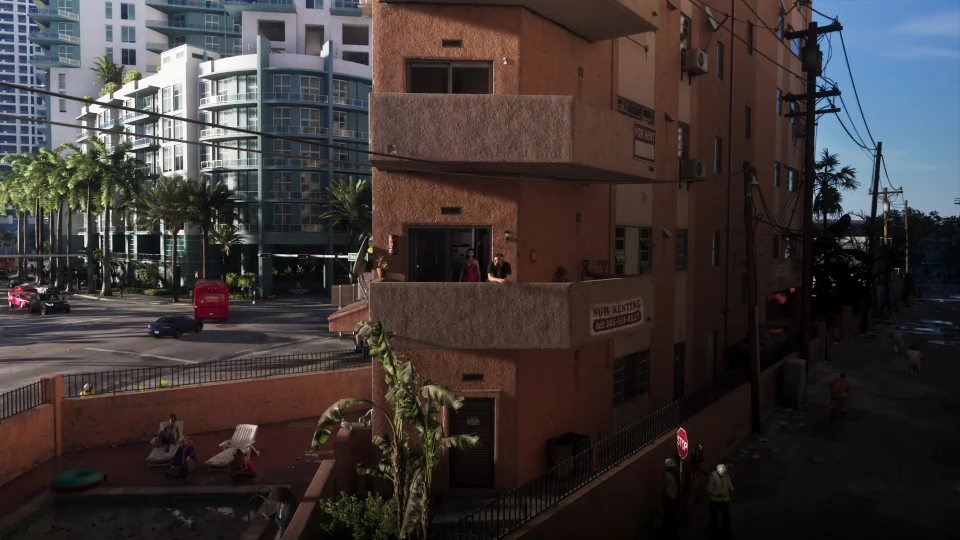
Images: Robert Ormerod’s photo for Bloomberg Businessweek; Rockstar Games’ official frame from An Extended Look, August 27, 2026.